
Our Services

Physiotherapy Services in Kannur

Ortho · Neuro · Paediatric · Geriatric · Sports Rehab and clinician-directed CPM care at Pranah, Moonnuperiya. Learn about CPM Therapy · Shockwave Therapy, coming soon.

General Physiotherapy

Physiotherapy & Pain Management

Persistent pain affects sleep, work and mood. Our physiotherapists identify what is driving your pain — joint stiffness, muscle imbalance, poor posture or nerve irritation — and treat it with a combination of manual therapy, electrotherapy and corrective exercise.

  • Neck pain & cervical spondylosis
  • Lower back pain & sciatica
  • Slip disc (disc prolapse)
  • Shoulder & elbow pain
  • Headaches from posture
  • Heel pain & plantar fasciitis
Book This Service
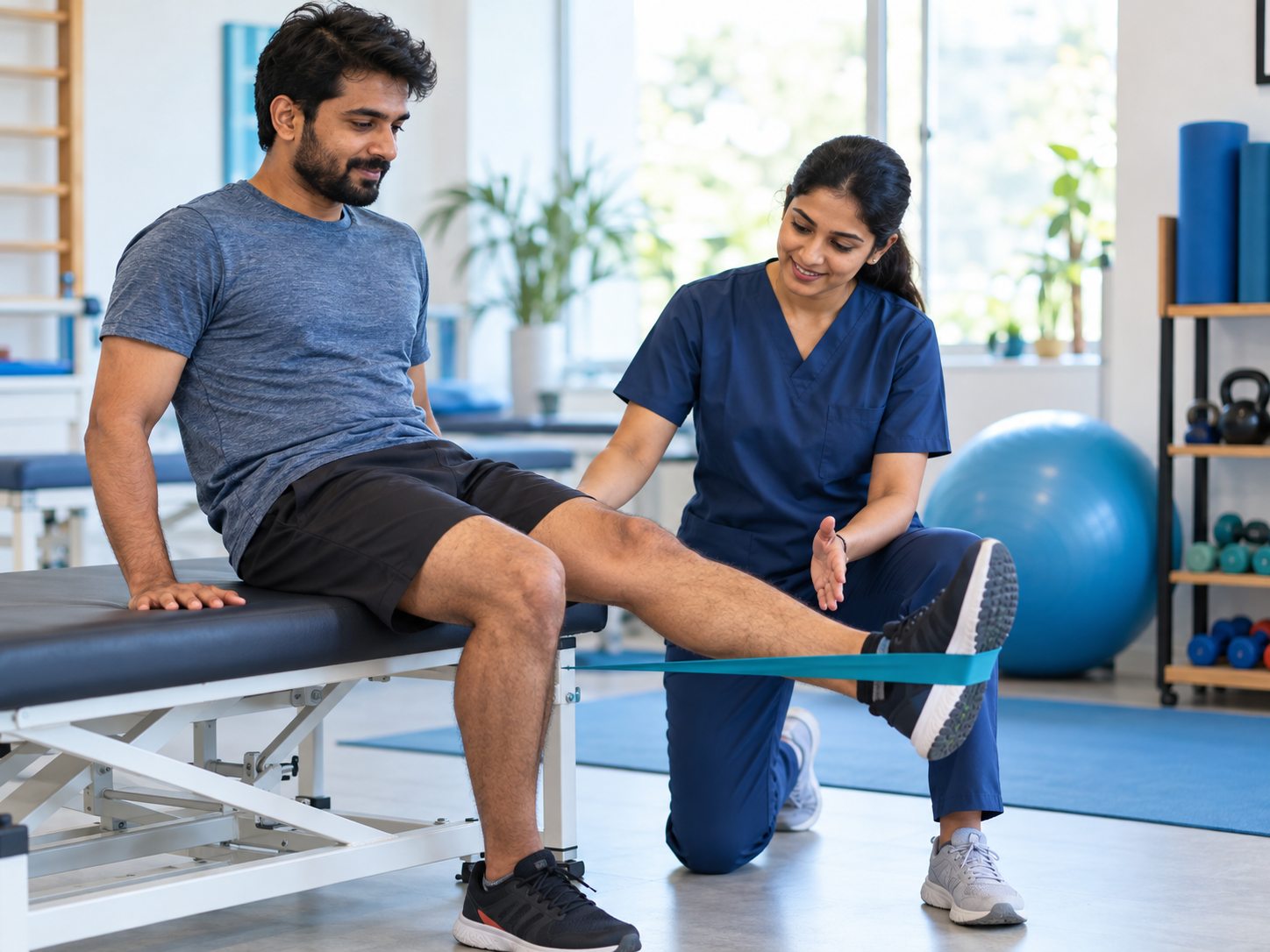
Physiotherapist guiding knee strengthening during orthopaedic rehabilitation
Orthopaedic Care

Orthopaedic Physiotherapy & Post-Surgery Rehab

From fractures and arthritis to joint replacement, orthopaedic physiotherapy restores range of motion, strength and confidence. We work alongside your orthopaedic surgeon's protocol to make sure you recover safely and completely.

  • Knee & hip replacement rehab
  • Fracture rehabilitation
  • Frozen shoulder
  • Osteoarthritis & rheumatoid arthritis
  • Spine surgery rehabilitation
  • Tendinitis & bursitis
Book This Service
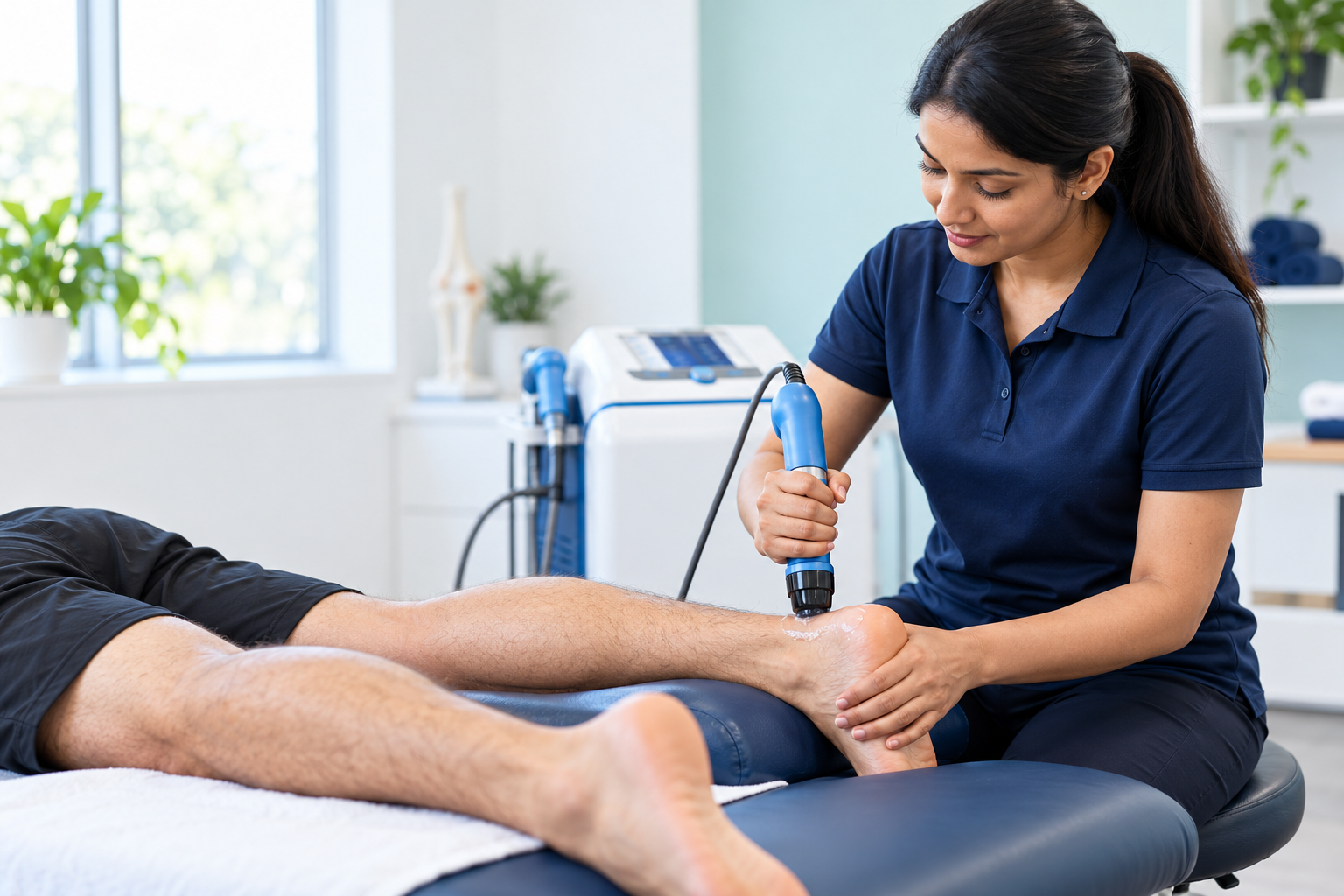
Physiotherapist applying shockwave therapy to a patient's Achilles tendon

Shockwave Therapy

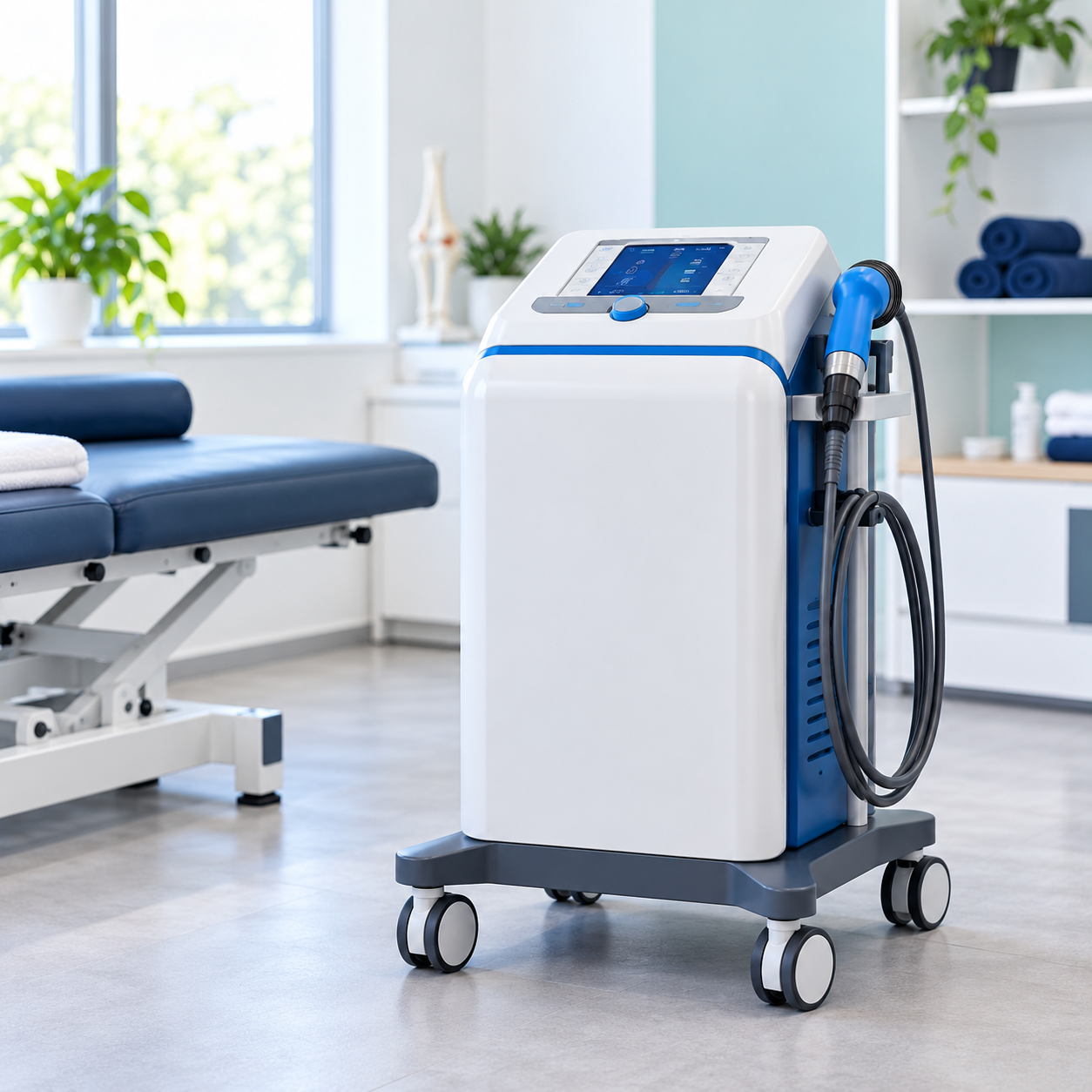
Extracorporeal shockwave therapy uses acoustic pulses as one possible part of a physiotherapy plan for selected persistent tendon and soft-tissue conditions. It may be considered for plantar heel pain, Achilles tendinopathy, tennis or golfer's elbow, calcific tendon problems and some sports-related tendon pain. Suitability depends on an assessment by your physiotherapist; results vary by person and condition. Contact us to ask about availability.

Illustrative unbranded shockwave therapy unit on a wheeled stand
Illustrative shockwave therapy equipment
  • Plantar heel pain
  • Achilles tendon pain
  • Tennis or golfer's elbow
  • Selected shoulder tendon problems
  • Persistent tendon pain
  • Some sports-related tendon injuries
Ask About Availability
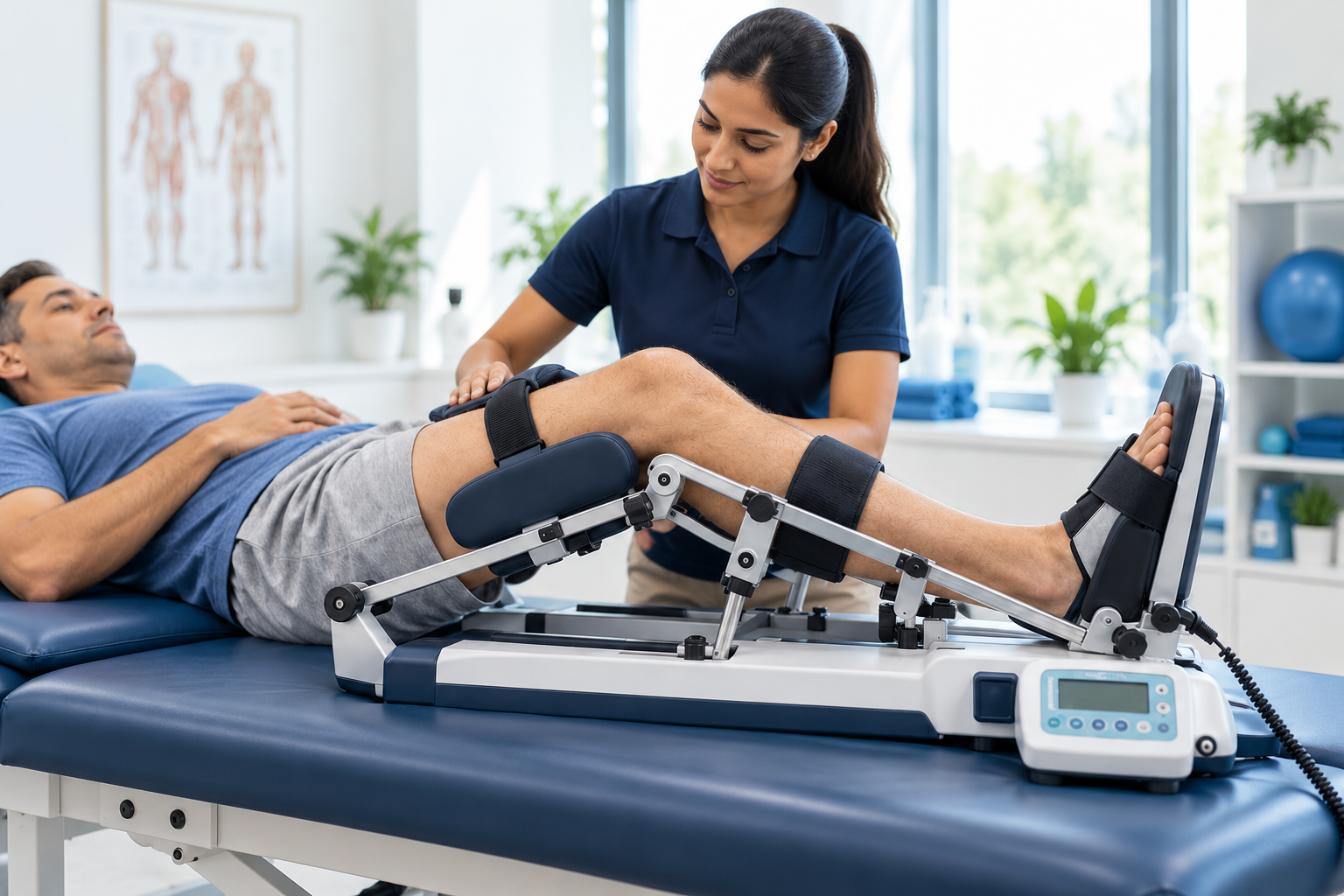
Physiotherapist checking a patient's knee setup on a continuous passive motion machine
Clinician-directed knee care

Continuous Passive Motion (CPM) Therapy

A CPM device gently bends and straightens the knee through a range set by a clinician. It may be included in selected knee rehabilitation plans after assessment, but is not routinely needed after every knee replacement. CPM does not replace your prescribed physiotherapy exercises; your care team sets the range and duration.

Ask About CPM Therapy
Physiotherapist supporting a patient during gait and balance rehabilitation
Neuro Rehab

Neuro Rehabilitation & Stroke Physiotherapy

Neurological conditions affect movement, balance and independence. Our neuro rehabilitation programmes use task-specific training, neuro-developmental techniques and balance and gait re-education to help the brain and body relearn function.

  • Stroke & hemiplegia
  • Parkinson's disease
  • Spinal cord injury
  • Bell's palsy & facial palsy
  • Peripheral neuropathy
  • Balance & vertigo problems
Book This Service
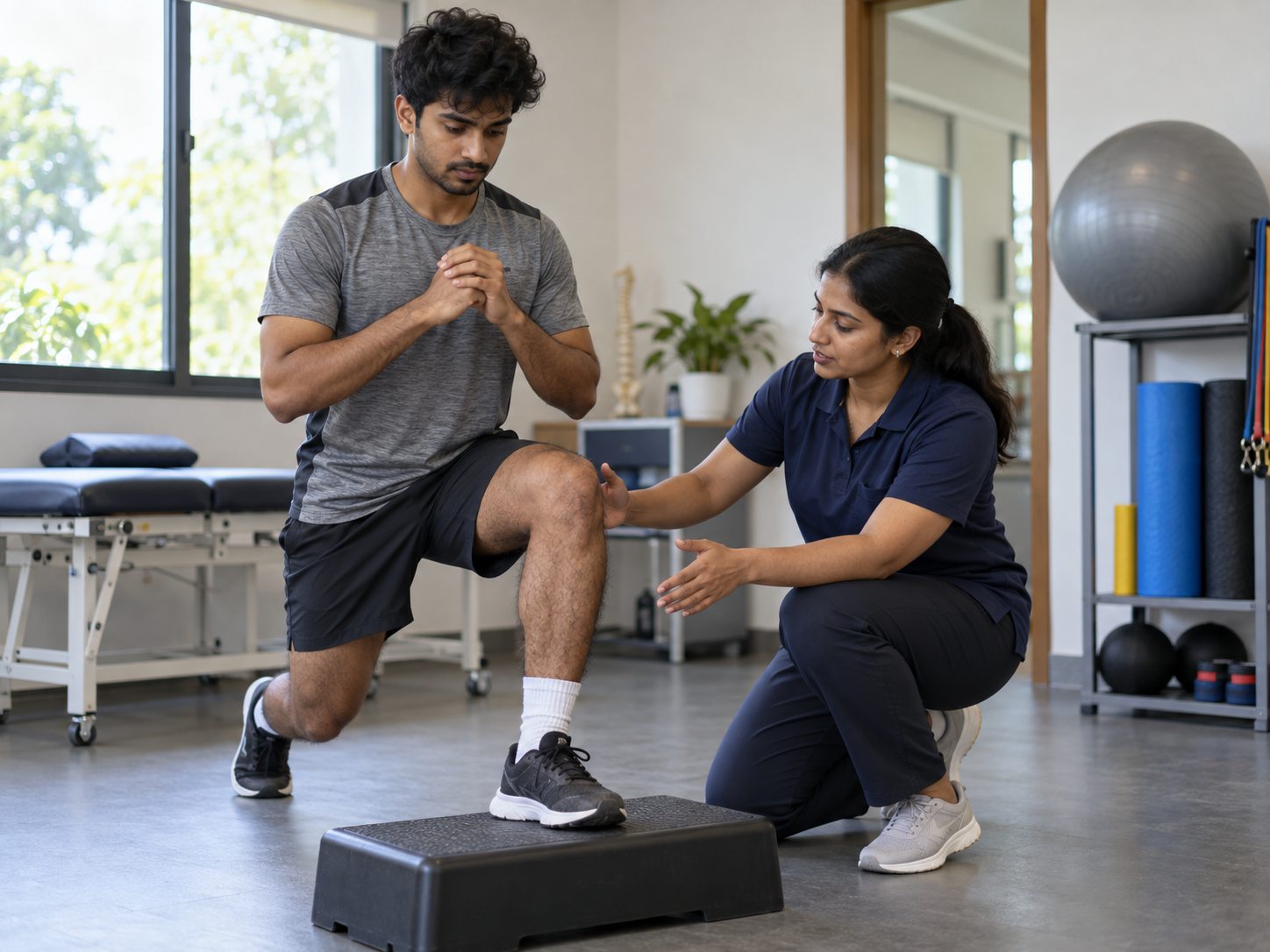
Illustrative photo of an athlete practicing a strengthening exercise with a physiotherapist
Sports Rehab

Sports Injury Rehabilitation

Return to your best performance with specialised rehab programmes. We combine injury treatment with strength, agility and sport-specific training — and objective return-to-play testing so you go back stronger, not just pain-free.

  • ACL & meniscus injuries
  • Ankle sprains
  • Hamstring & calf strains
  • Shoulder dislocation
  • Tennis & golfer's elbow
  • Kinesio taping & injury prevention
Book This Service
Child practicing balance with a paediatric physiotherapist
Paediatric Care

Paediatric Physiotherapy

Children are not small adults. Our paediatric physiotherapy uses gentle, play-based activities to build strength, coordination and motor skills, and we work closely with parents so progress continues at home.

  • Developmental delay
  • Cerebral palsy
  • Torticollis
  • Flat feet & toe walking
  • Posture & scoliosis
  • Coordination difficulties
Book This Service
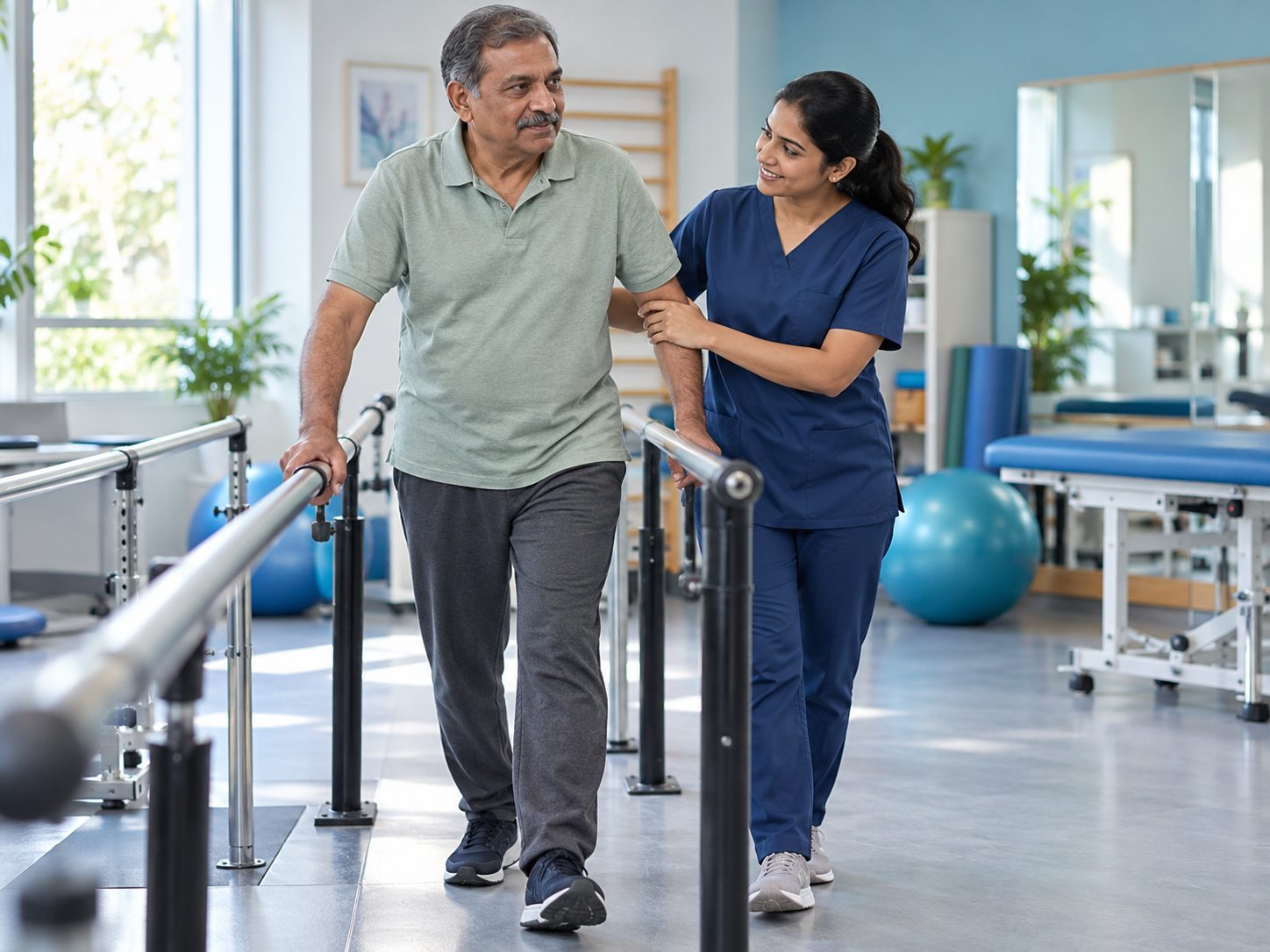
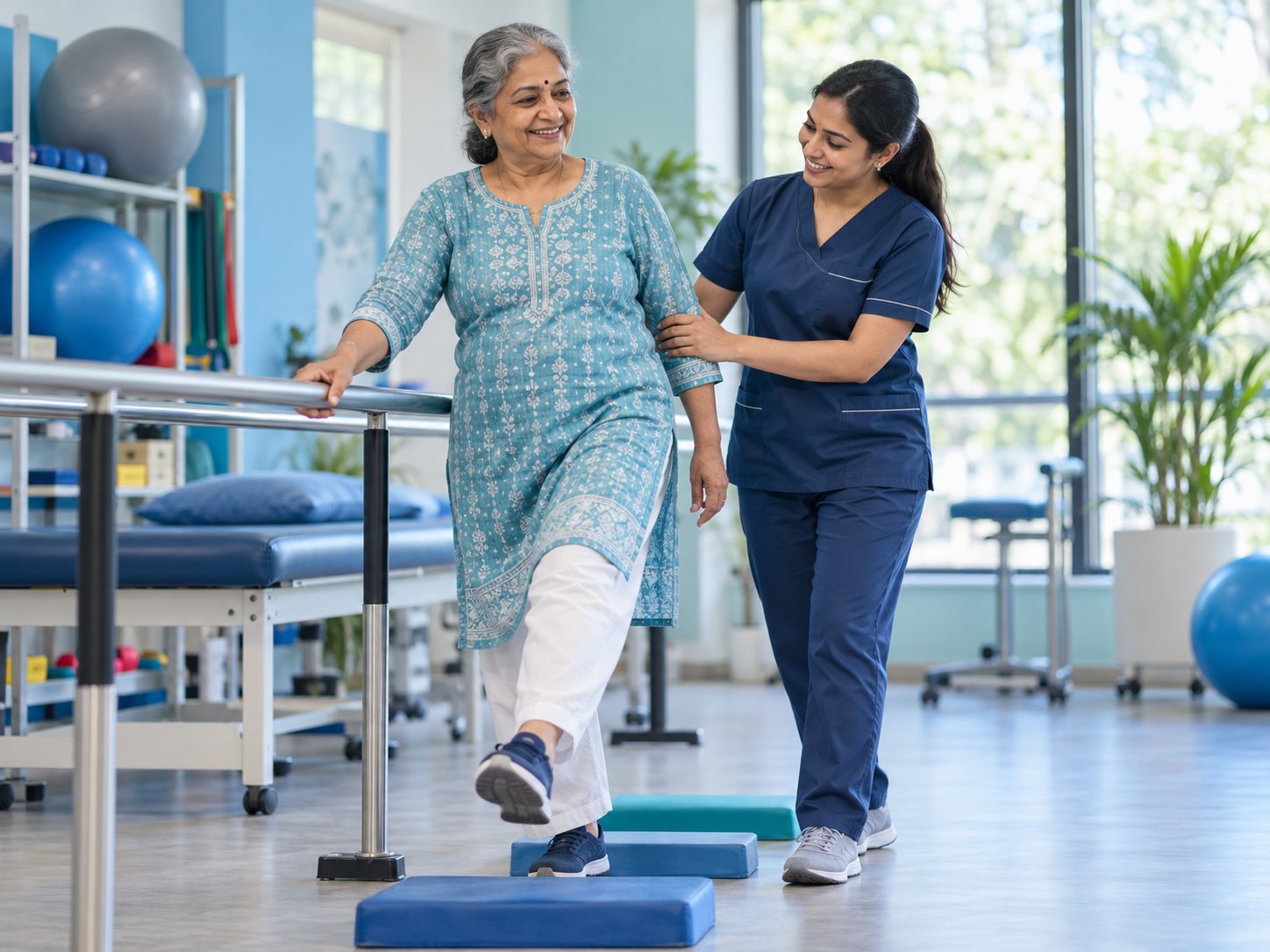
Older adult practicing supported walking with a geriatric physiotherapist
Geriatric Care

Geriatric Physiotherapy for Seniors

Staying strong and steady is the key to independence in later life. Our geriatric physiotherapy focuses on safe strengthening, balance and walking so seniors can keep doing the things that matter to them.

  • Fall prevention & balance
  • Knee osteoarthritis
  • Osteoporosis care
  • Walking & gait training
  • Post-hospital deconditioning
  • Chronic joint stiffness
Book This Service
How We Support Recovery

Treatment Approaches Matched to Your Goals

Your physiotherapist will recommend an approach after assessing your needs. These methods may be combined as part of an individual rehabilitation plan.

Manual Therapy

Hands-on techniques, including joint mobilisation and soft-tissue work, can help address stiffness and support comfortable movement alongside exercise.

Electrotherapy

When appropriate, electrotherapy may be used to support pain management or muscle re-education as one part of a wider rehabilitation plan.

Exercise Therapy

Personalised strength, mobility, balance and movement exercises help build function for daily activities, sport and recovery.

FAQ

Questions About Our Physiotherapy Services

What happens during the first physiotherapy session?

Your first visit includes a detailed assessment of your symptoms, medical history, posture, movement and strength. Your physiotherapist then explains the likely cause of your problem, sets goals with you and usually begins treatment in the same session.

Is physiotherapy painful?

Physiotherapy should not be painful. Some techniques and exercises can cause mild, temporary discomfort or muscle soreness, but your physiotherapist will always work within your comfort level and adjust treatment based on your feedback.

Can physiotherapy help avoid surgery?

For many conditions — such as disc problems, knee osteoarthritis, rotator cuff issues and some ligament injuries — a structured physiotherapy programme can significantly reduce pain and improve function, helping many people avoid or delay surgery. Your doctor and physiotherapist can advise what is right for you.

When should physiotherapy start after surgery?

For most joint replacements and orthopaedic surgeries, gentle physiotherapy begins within a day or two of the operation, following your surgeon's protocol. Starting early helps reduce stiffness, swelling and the risk of complications.

Not Sure Which Service You Need?

Call us and our physiotherapist will guide you to the right treatment.