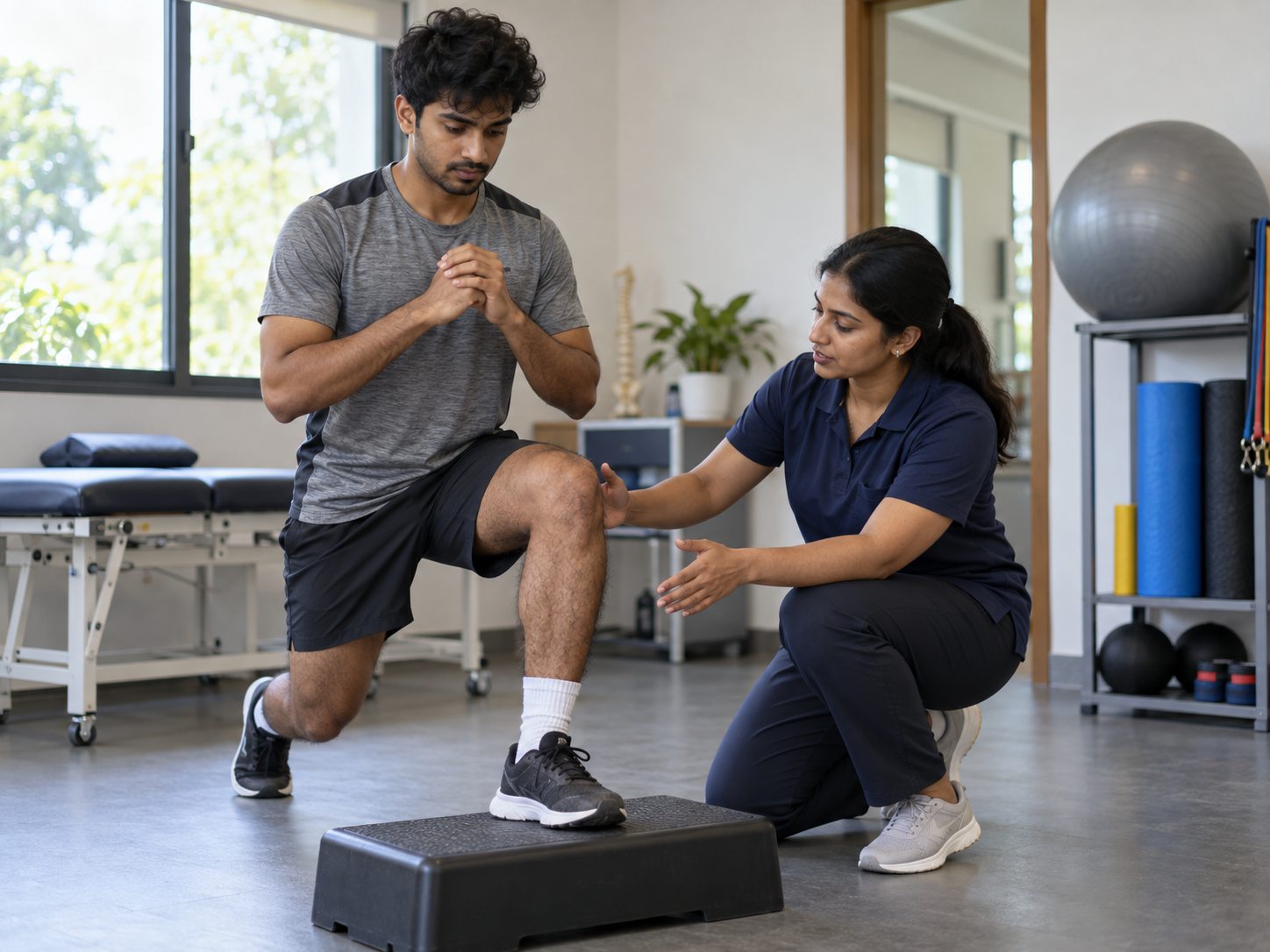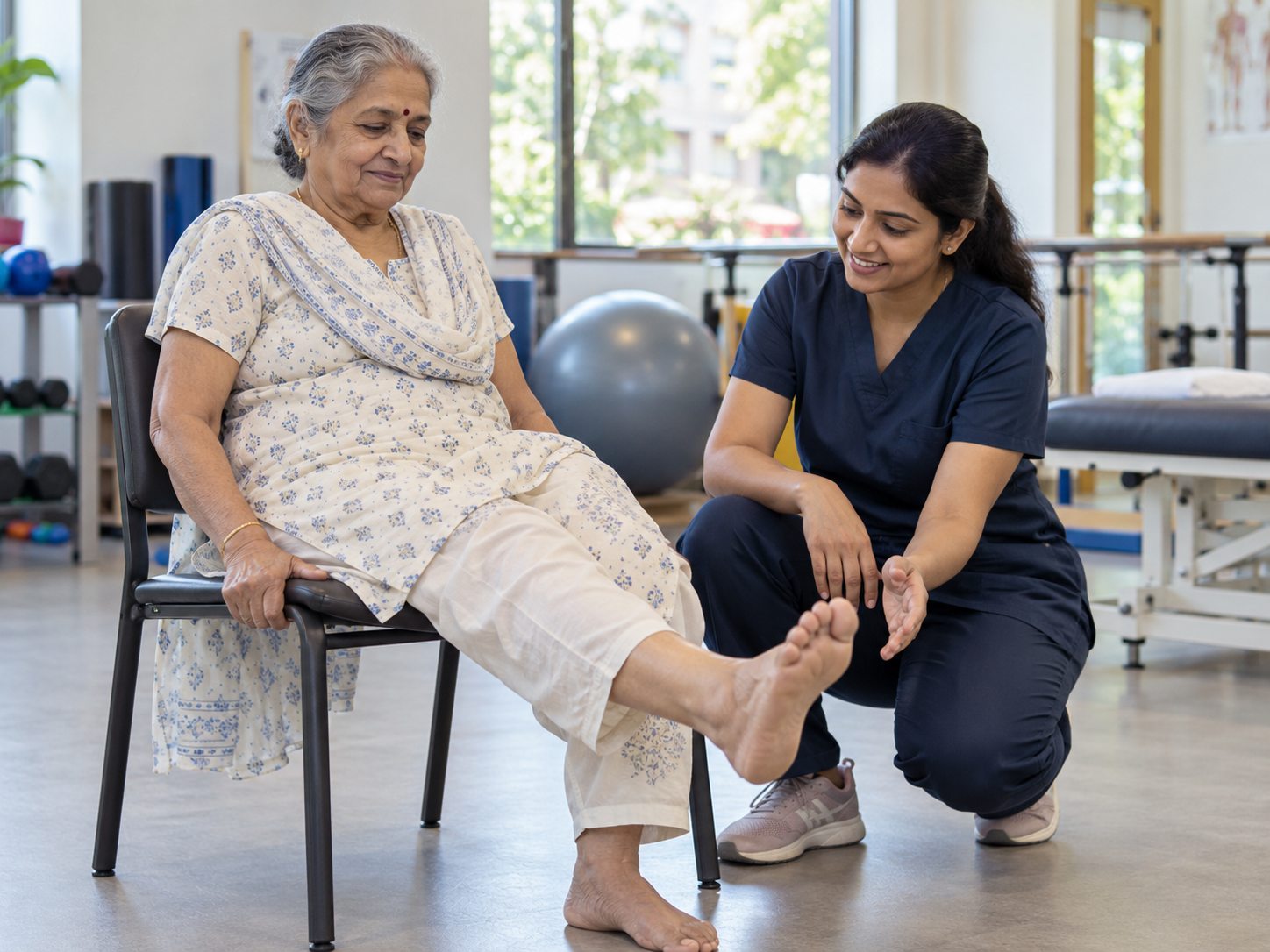
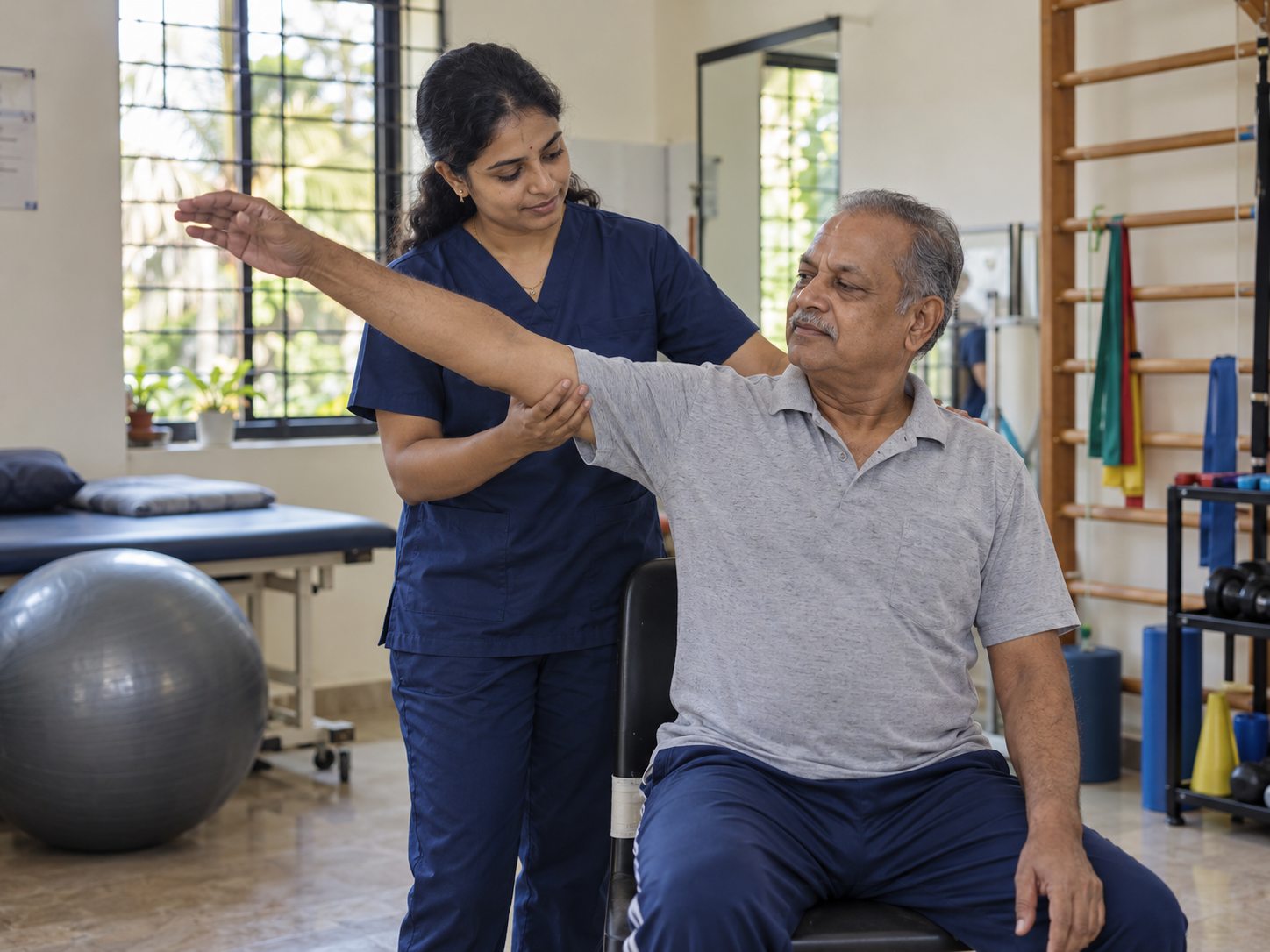
Lower back pain is one of the most common reasons people visit a physiotherapist — and one of the leading causes of disability worldwide. The good news? Most back pain responds very well to the right physiotherapy. In this guide, our team at Pranah Physiotherapy in Kannur explains what causes back pain, the seven treatment techniques that make the biggest difference, and simple exercises you can start at home.
Why Is Lower Back Pain So Common?
Your lower back (lumbar spine) carries most of your upper body weight and is involved in almost every movement — bending, lifting, sitting, twisting and walking. Modern routines put it under constant strain. Common triggers we see every day at our clinic in Moonnuperiya include:
- Long hours of sitting at a desk, in a car or on a two-wheeler, often with a slouched posture.
- Lifting incorrectly — bending and twisting while carrying heavy loads, at work or at home.
- Weak core and hip muscles that cannot support the spine properly.
- Reduced activity — joints and discs stay healthiest when we move regularly.
- Disc changes such as a disc bulge or prolapse (commonly called a "slip disc").
- Stress, poor sleep and weight gain, all of which increase pain sensitivity and load on the spine.
In the majority of cases, back pain is "non-specific" — meaning it comes from muscles, ligaments, joints and discs working under too much load, rather than from serious damage. That is exactly why active, movement-based physiotherapy works so well.
Common Types of Back Pain
| Type | Typical Symptoms | How Physiotherapy Helps |
|---|---|---|
| Muscle strain / mechanical pain | Ache or spasm in the lower back, worse with certain movements | Manual therapy, gentle mobility, graded strengthening |
| Disc bulge / slip disc | Pain worse with sitting or bending forward, may spread to buttock or leg | Directional preference exercises, core stability, posture correction |
| Sciatica | Shooting pain, tingling or numbness down the back of the leg | Nerve mobility exercises, disc offloading, strengthening |
| Lumbar spondylosis | Stiffness, especially in the morning; common after 40 | Joint mobilisation, flexibility work, regular low-impact exercise |
| Postural back pain | Dull ache after long sitting or standing, eases with movement | Ergonomic advice, posture training, endurance exercises |
7 Physiotherapy Techniques That Relieve Back Pain
1. A Thorough Assessment and Clear Explanation
Effective back pain treatment begins with understanding your back. Your physiotherapist checks posture, spinal movement, muscle strength, flexibility and nerve function to work out what is driving your pain. Research consistently shows that understanding your condition — and knowing that "hurt does not always mean harm" — reduces fear and speeds up recovery.
2. Manual Therapy and Spinal Mobilisation
Hands-on techniques such as joint mobilisation, soft tissue release and muscle energy techniques ease stiffness and muscle spasm. Manual therapy works best as a "door opener" — it reduces pain so you can move and exercise more comfortably.
3. Core Stabilisation Training
Your deep abdominal muscles, back extensors, pelvic floor and diaphragm work together like a natural corset around the spine. Targeted core stability exercises — progressing from gentle activation to functional movements — improve spinal control and reduce the chance of pain returning.
4. Directional Preference (McKenzie-Style) Exercises
Many people with disc-related pain find that repeated movements in one direction — often gentle backward bending — reduce or "centralise" their leg pain. A physiotherapist can test which direction helps you and design a simple routine around it. This should be guided, as the right direction differs from person to person.
5. Electrotherapy and Heat as Short-Term Relief
Modalities such as TENS, interferential therapy (IFT) and therapeutic heat can calm pain and muscle spasm, especially in the early, acute phase. At Pranah we use them as a support to active treatment — never as a replacement for exercise.
6. Stretching and Flexibility Work
Tight hamstrings, hip flexors and gluteal muscles pull on the pelvis and change how load passes through the lower back. Regular, targeted stretching restores balanced movement between the hips and spine.
7. Posture, Ergonomics and Graded Return to Activity
Small changes make a big difference: adjusting your desk and chair, taking movement breaks every 30–45 minutes, learning to lift with your hips and knees, and gradually rebuilding activity levels. Bed rest is no longer recommended — staying gently active is one of the best things you can do for back pain.
Struggling with back pain in Kannur?
Our physiotherapists will find the cause of your pain and build a plan to fix it.
5 Gentle Home Exercises for Lower Back Pain
These exercises are safe for most people with mild, non-specific back pain. Move slowly, breathe normally, and stop if your pain spreads further down the leg or becomes sharp.
1. Pelvic Tilts
Lie on your back with knees bent and feet flat. Gently tighten your tummy and flatten your lower back into the floor, tilting the pelvis upward. Hold for 5 seconds, then relax. Repeat 10 times, 2 sets.
2. Knee-to-Chest Stretch
Lying on your back, bring one knee towards your chest and hold it with both hands. Keep the other foot on the floor. Hold for 20–30 seconds, then switch sides. Repeat 3 times each side.
3. Cat–Camel
On hands and knees, slowly arch your back up towards the ceiling, then let it gently dip down while lifting your head. Move within a comfortable range. Repeat 10 times.
4. Bird-Dog
On hands and knees, keep your back flat and extend one arm forward and the opposite leg back. Hold for 5 seconds without letting your back sag or twist. Repeat 8–10 times each side.
5. Glute Bridge
Lie on your back, knees bent. Squeeze your buttocks and lift your hips until your body forms a straight line from shoulders to knees. Hold for 3–5 seconds and lower slowly. Repeat 10–12 times, 2 sets.
See a doctor immediately if back pain comes with any of the following:
- Loss of bladder or bowel control, or numbness around the groin or buttocks
- Weakness in the legs that is getting worse
- Fever, unexplained weight loss or a history of cancer
- Pain after a major fall or accident
- Severe pain at night that does not change with position
How to Prevent Back Pain From Coming Back
- Keep moving: aim for at least 150 minutes of moderate activity per week, such as brisk walking or swimming.
- Strengthen regularly: continue core and hip exercises 2–3 times a week even after pain settles.
- Break up sitting: stand, stretch or walk for a few minutes every half hour.
- Lift smart: keep loads close to your body, bend at the hips and knees, and avoid twisting.
- Sleep well: a medium-firm mattress and a pillow that supports your neck help many people.
- Manage weight and stress: both directly affect how much your back hurts.
Back pain often comes with neck and shoulder tension too. Learn about our full range of physiotherapy and pain management services, or read our guide to knee osteoarthritis exercises for seniors.
Back Pain Physiotherapy: FAQs
How long does it take for physiotherapy to fix back pain?
Most people with acute, non-specific lower back pain notice improvement within 2–6 weeks of regular physiotherapy. Chronic or disc-related back pain may take 6–12 weeks of consistent treatment and home exercise.
Can physiotherapy cure a slip disc without surgery?
Many disc bulges and prolapses improve with conservative care. Physiotherapy — including directional preference exercises, core strengthening and posture correction — helps a large proportion of patients recover without surgery. Surgery is usually considered only when there is severe nerve compression or symptoms do not improve.
Should I rest completely when I have back pain?
No. Prolonged bed rest tends to slow recovery. It is better to stay gently active within comfort, avoid movements that sharply increase pain, and gradually return to normal activities.
Is heat or ice better for lower back pain?
For most back pain, gentle heat for 15–20 minutes helps relax muscle spasm and stiffness. Ice may help for a day or two after a sudden strain. Use whichever feels more comfortable, and always protect your skin.
Where can I get back pain treatment in Kannur?
Pranah Advanced Physiotherapy Centre in Moonnuperiya, Kannur offers assessment and treatment for back pain, slip disc and sciatica. Call or WhatsApp 95671 42288 to book an appointment.
Medical disclaimer: This article is for general education only and is not a substitute for a personal assessment. Please consult a qualified physiotherapist or doctor before starting any new exercise or treatment, especially if you have a medical condition.