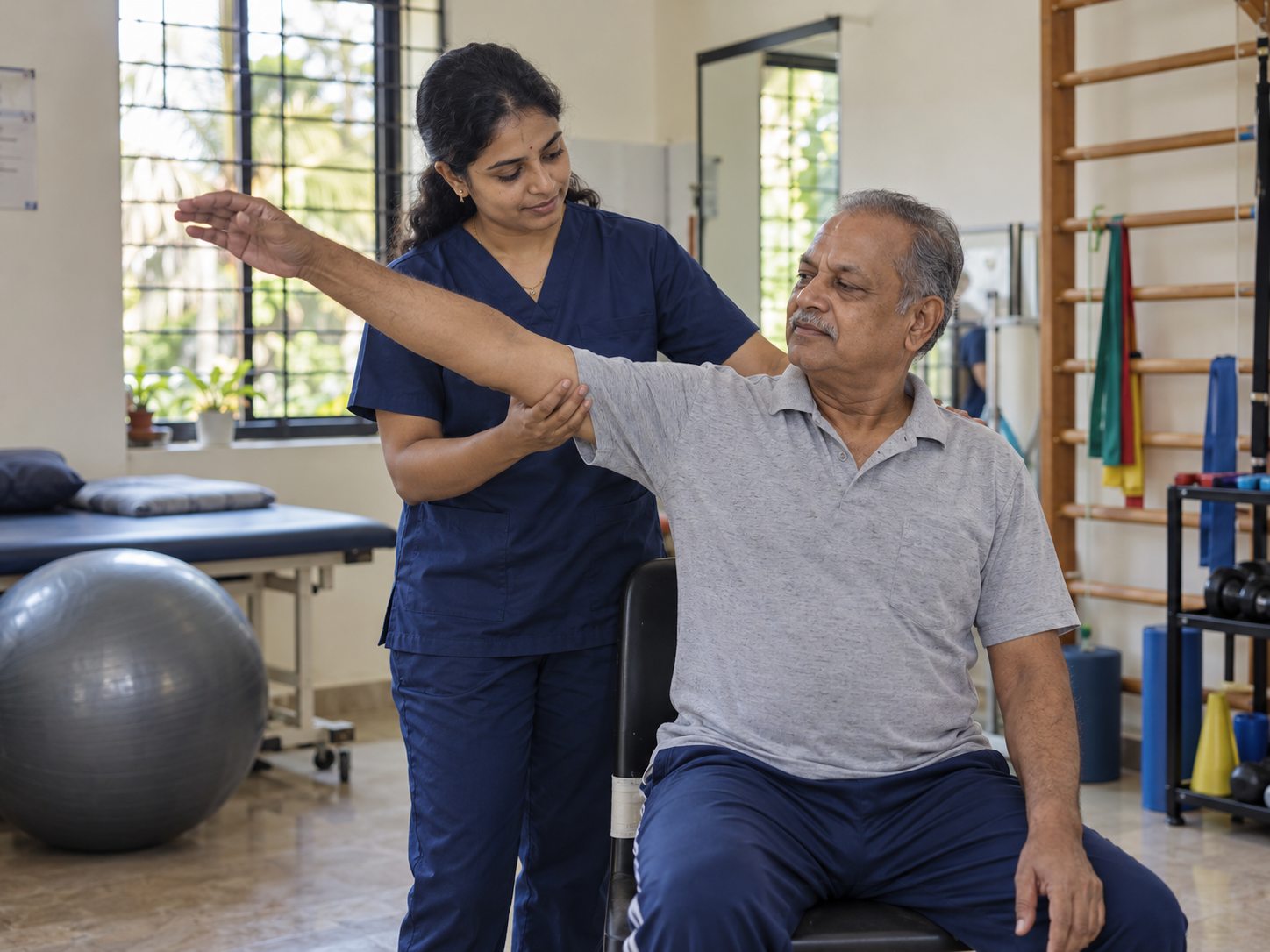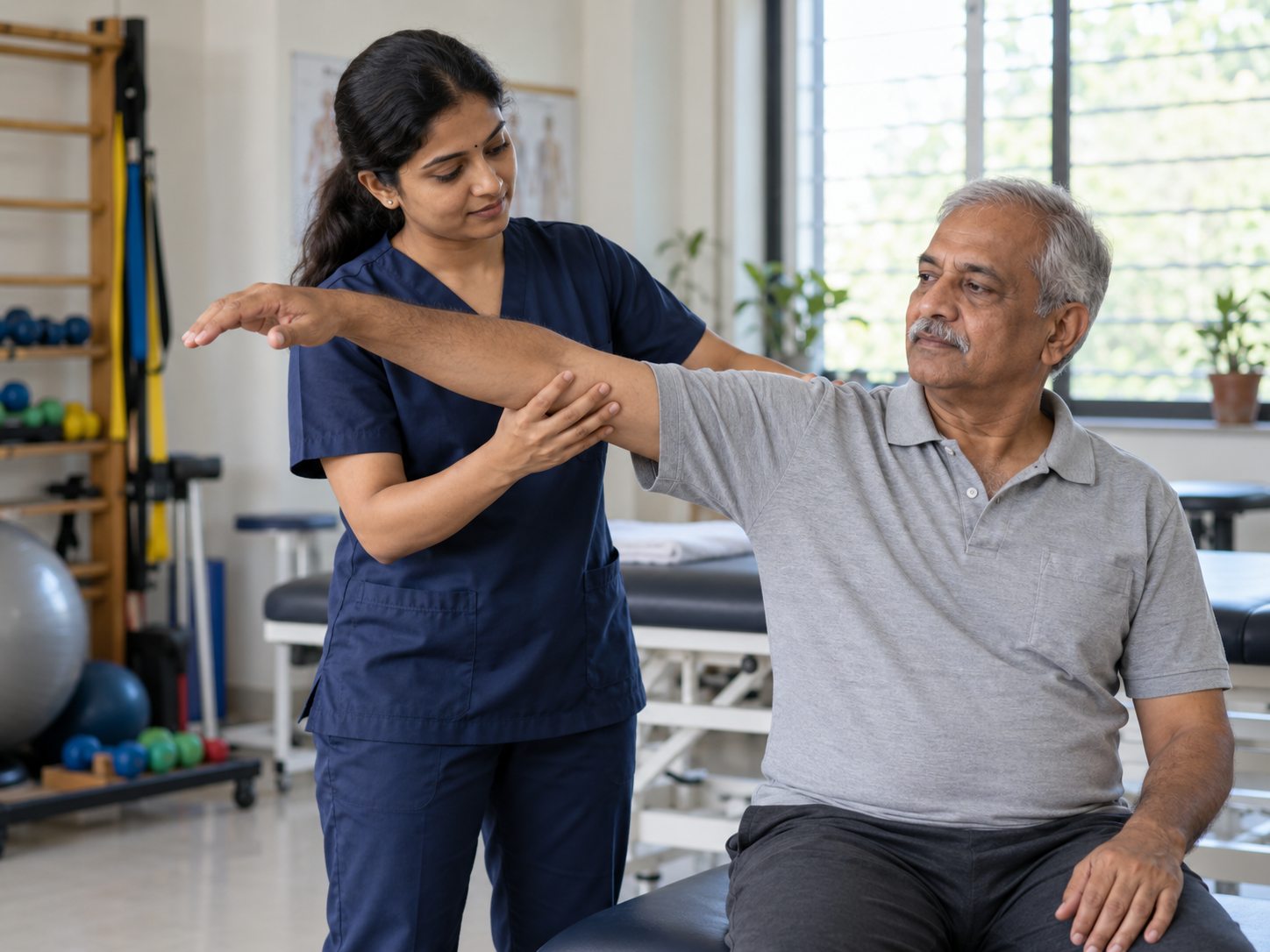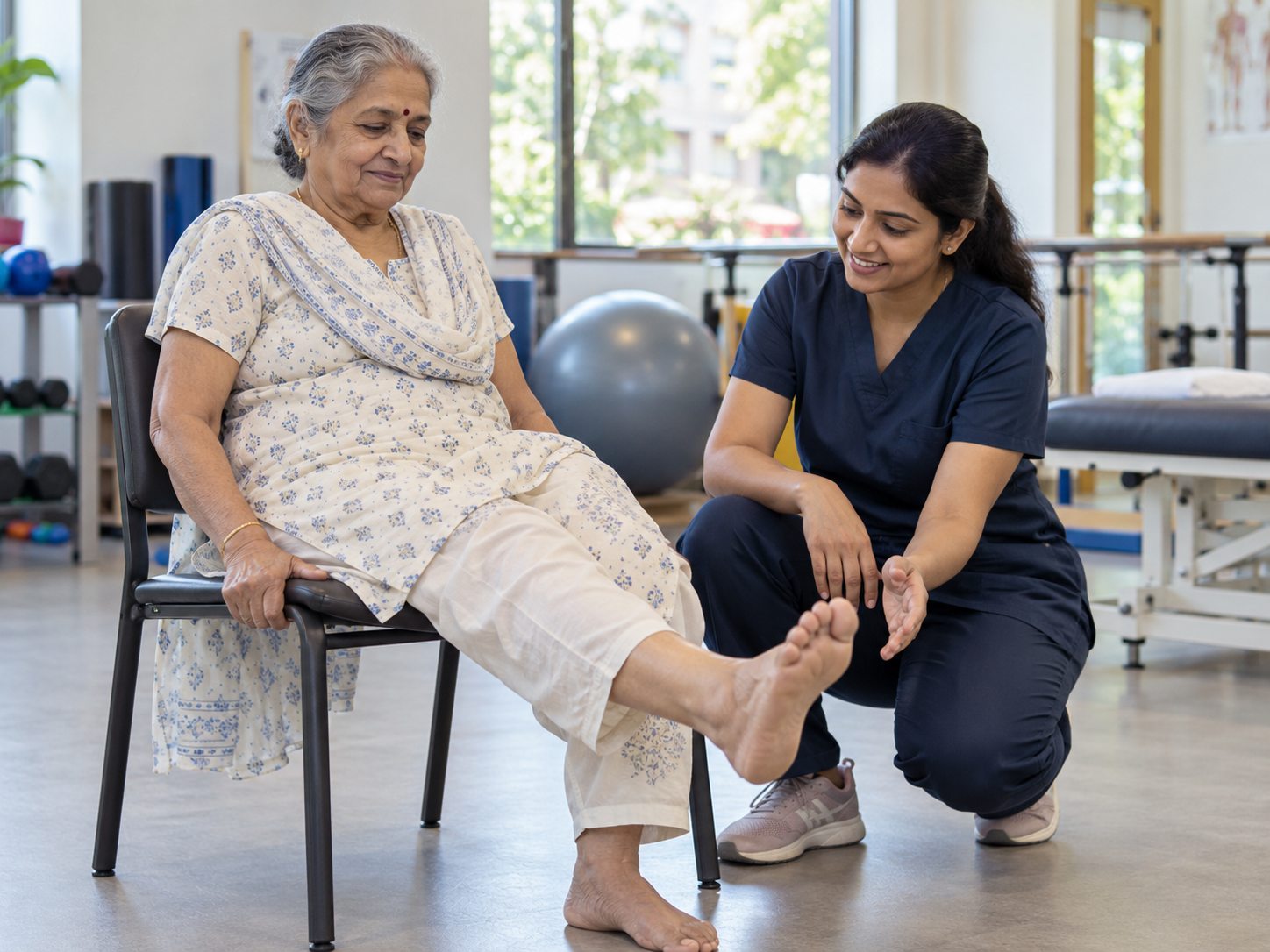
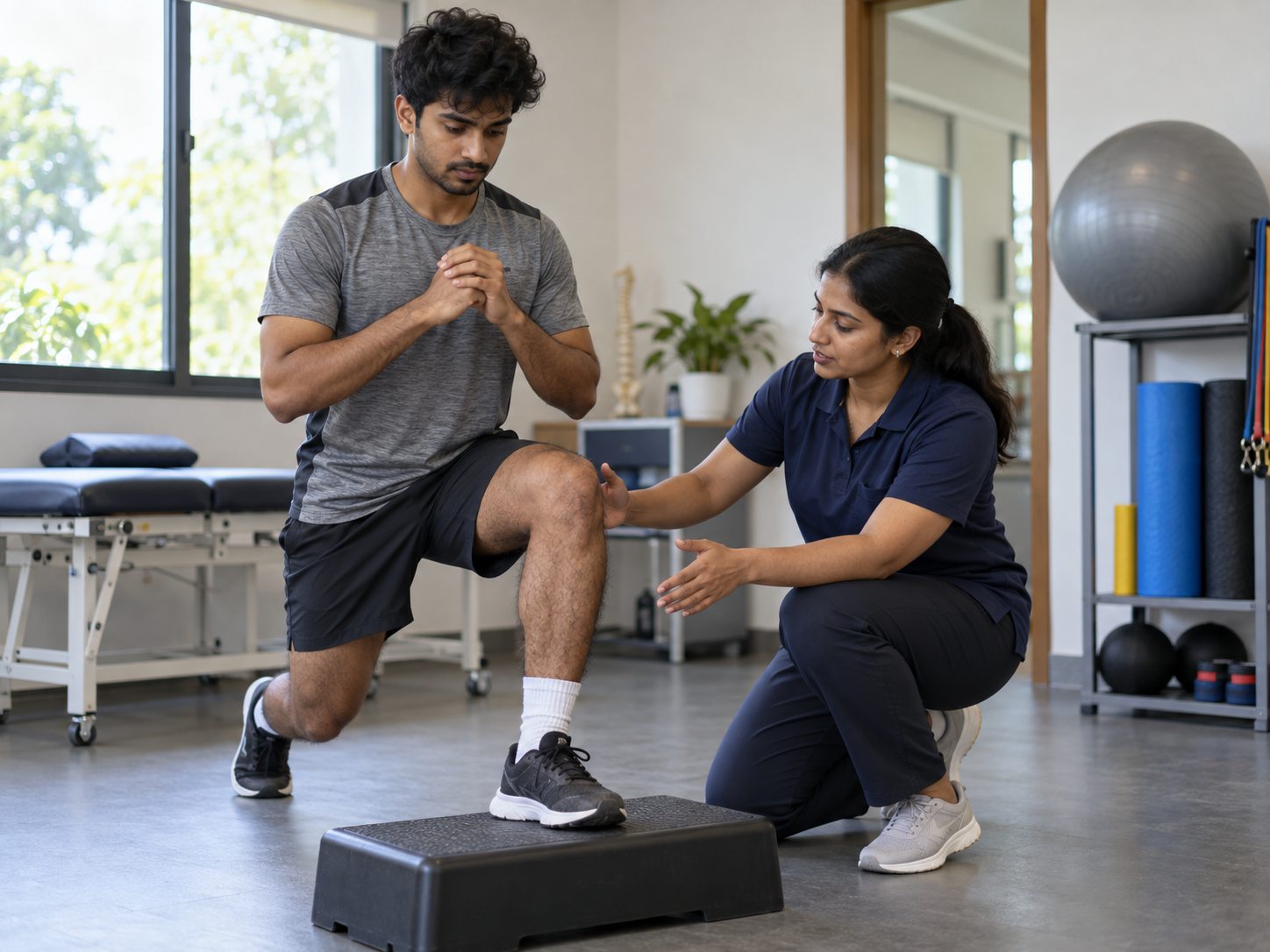
From weekend football and evening cricket to running, badminton and gym training, more people in Kannur are playing sport than ever — and sports injuries are rising with them. Whether you have rolled an ankle, pulled a hamstring or are recovering from ACL surgery, a structured sports injury rehabilitation programme is what separates a full comeback from a repeat injury. Here is how physiotherapy gets you back in the game.
The Most Common Sports Injuries
Sports injuries fall into two groups: acute injuries that happen suddenly (a sprain, tear or dislocation) and overuse injuries that build up over time from repeated stress (tendinopathy, shin splints, stress reactions).
| Injury | Common In | Typical Rehab Time* |
|---|---|---|
| Ankle sprain | Football, basketball, running on uneven ground | 2–6 weeks (mild–moderate) |
| Hamstring strain | Sprinting, football, cricket | 2–8 weeks or more |
| ACL tear / reconstruction | Football, kabaddi, basketball | 9–12 months after surgery |
| Meniscus injury | Twisting and pivoting sports | 6 weeks – 4 months |
| Shoulder dislocation / rotator cuff | Cricket bowling, volleyball, gym | 6–12 weeks or more |
| Tennis / golfer's elbow | Racquet sports, gym, manual work | 6–12 weeks or more |
| Shin splints | Running, sudden training increase | 2–6 weeks |
| Patellar tendinopathy (jumper's knee) | Volleyball, basketball, jumping sports | 6–12 weeks or more |
*Approximate guide only. Recovery depends on injury severity, treatment and individual factors.
First Aid for Sports Injuries: PEACE & LOVE
You may know the old "RICE" advice. Modern sports medicine now follows the PEACE & LOVE approach, which recognises that healthy movement and loading are essential for tissue healing.
Immediately after injury — PEACE
- Protect: reduce movement that increases pain for the first 1–3 days.
- Elevate: raise the injured limb above the heart when possible.
- Avoid anti-inflammatories and heavy icing in the first days unless advised — inflammation is part of healing.
- Compress: use a bandage or taping to limit swelling.
- Educate: understand your injury and avoid unnecessary passive treatments.
After the first days — LOVE
- Load: let pain guide a gradual return to normal activity.
- Optimism: a positive mindset is linked to better outcomes.
- Vascularisation: pain-free cardio exercise boosts blood flow to healing tissues.
- Exercise: restore mobility, strength and balance with an active programme.
The 5 Stages of Sports Injury Rehabilitation
Stage 1: Protect and Calm
Reduce pain and swelling while protecting the healing tissue. Your physiotherapist may use taping, gentle manual therapy, electrotherapy and pain-free movement.
Stage 2: Restore Mobility
Regain full range of motion in the injured joint and surrounding muscles, and normalise walking or basic movement patterns.
Stage 3: Rebuild Strength and Control
Progressive strengthening — often the longest phase — rebuilds muscle size, power and neuromuscular control. Balance and proprioception training (single-leg work, wobble boards) are vital, especially after ankle and knee injuries.
Stage 4: Sport-Specific Training
Running, cutting, jumping, landing, throwing and agility drills are reintroduced in a controlled way to prepare the body for the demands of your sport.
Stage 5: Return to Play
A gradual return to team training and then full competition, guided by objective testing rather than just "feeling okay".
Get back to your sport — stronger
Pranah Physiotherapy in Kannur offers sports injury assessment, rehab and kinesio taping for athletes of every level.
Spotlight: ACL Injury Rehabilitation
The anterior cruciate ligament (ACL) is one of the most important stabilisers of the knee and is commonly injured during sudden twisting, landing or change-of-direction movements. Whether you choose surgery or a non-surgical approach, physiotherapy is central to recovery.
- Pre-habilitation: reducing swelling and restoring full knee straightening and quadriceps strength before surgery leads to better results afterwards.
- Weeks 0–6: control swelling, regain full extension, activate the quadriceps, normalise walking.
- Months 2–4: progressive strength training, balance work, cycling and early controlled running.
- Months 4–9: plyometrics, agility, cutting and sport-specific drills.
- 9+ months: return to competitive sport once return-to-play criteria are met.
Returning to pivoting sports too early is one of the biggest risk factors for re-injury, so patience truly pays off.
When Is It Safe to Return to Play?
Time alone is not enough. Before returning to full sport, your physiotherapist will check that you have:
- Full, pain-free range of motion and no swelling after training
- Strength in the injured limb that is close to the uninjured side (often 90% or more)
- Good results on hop, balance and agility tests
- Completed full team training without symptoms
- The confidence to perform without fear of re-injury
How to Prevent Sports Injuries
- Warm up properly: structured programmes such as the FIFA 11+ warm-up have been shown to reduce injuries in football players.
- Build strength year-round: especially hamstrings, glutes, calves, core and shoulder stabilisers.
- Increase training gradually: sudden jumps in distance, intensity or frequency are a common cause of overuse injuries.
- Prioritise recovery: sleep, nutrition, hydration and rest days matter as much as training.
- Wear the right footwear for your sport and playing surface.
- Get niggles checked early — small problems are much easier to fix before they become big ones.
Learn more about our sports rehabilitation services, or read our guide to back pain treatment and core strengthening.
Sports Injury Rehab: FAQs
Should I see a physiotherapist for a sprained ankle?
Yes. Ankle sprains are often under-treated, and without proper balance and strength rehabilitation, many people develop repeated sprains or long-term ankle instability. A physiotherapist can guide recovery and reduce the risk of re-injury.
How soon after an ACL surgery should physiotherapy start?
Physiotherapy usually begins within the first few days after ACL reconstruction, following your surgeon's protocol. Early goals are controlling swelling, regaining full knee extension and activating the quadriceps.
Does kinesio taping really work?
Kinesio taping can help some athletes by providing support, improving body awareness and reducing pain during activity. It works best as part of a complete rehabilitation programme, not as a stand-alone treatment.
Can I keep training while injured?
Often, yes — with modifications. A physiotherapist can help you keep fitness through activities that do not stress the injured area, while the injury is rehabilitated. Complete rest is rarely necessary.
Where can I get sports injury physiotherapy in Kannur?
Pranah Advanced Physiotherapy Centre in Moonnuperiya, Kannur provides sports injury assessment, rehabilitation and return-to-play programmes. Call or WhatsApp 95671 42288 to book.
Medical disclaimer: This article is for general education only and is not a substitute for a personal assessment. Please consult a qualified physiotherapist or doctor before starting any new exercise or treatment, especially if you have a medical condition.