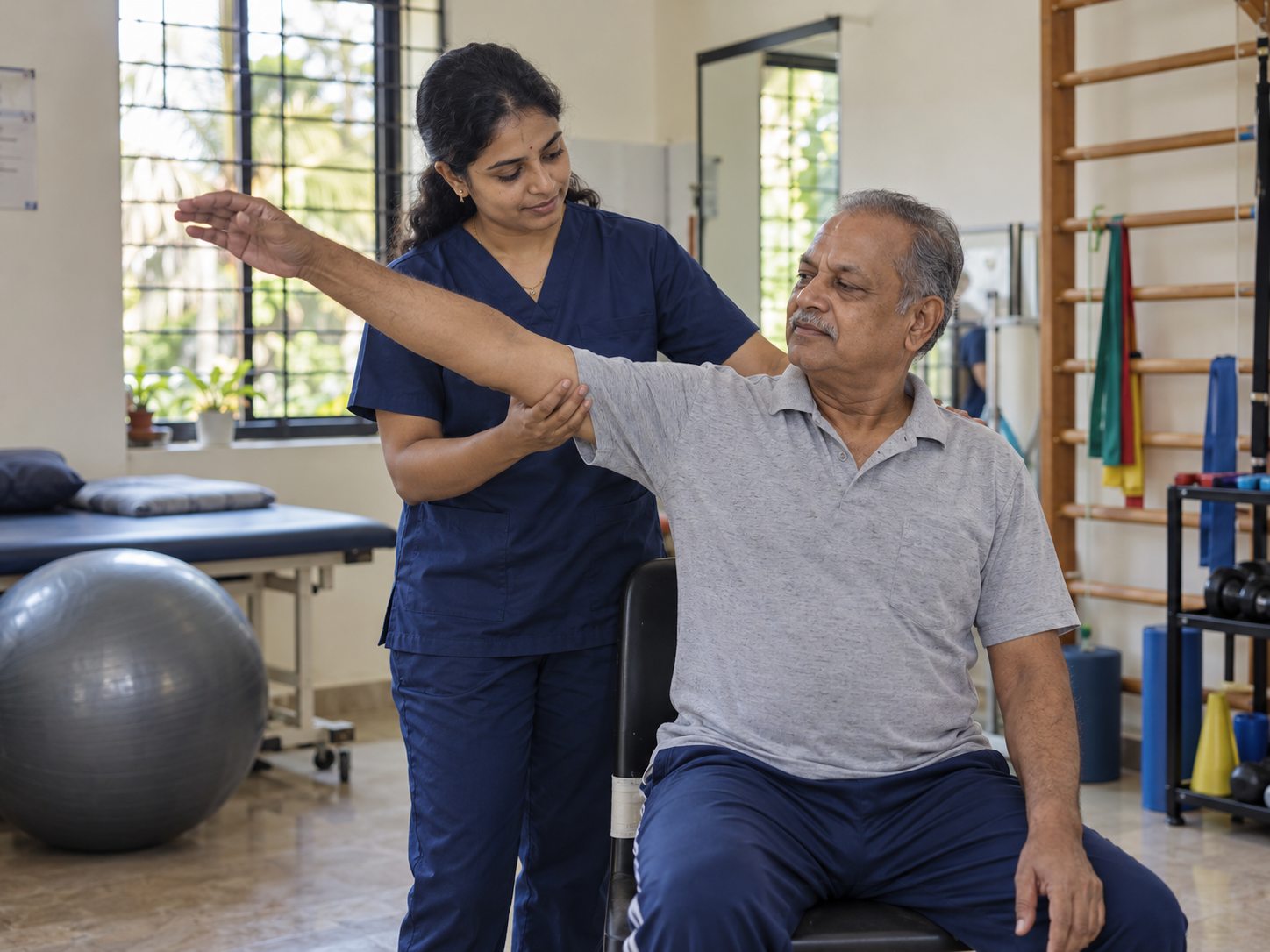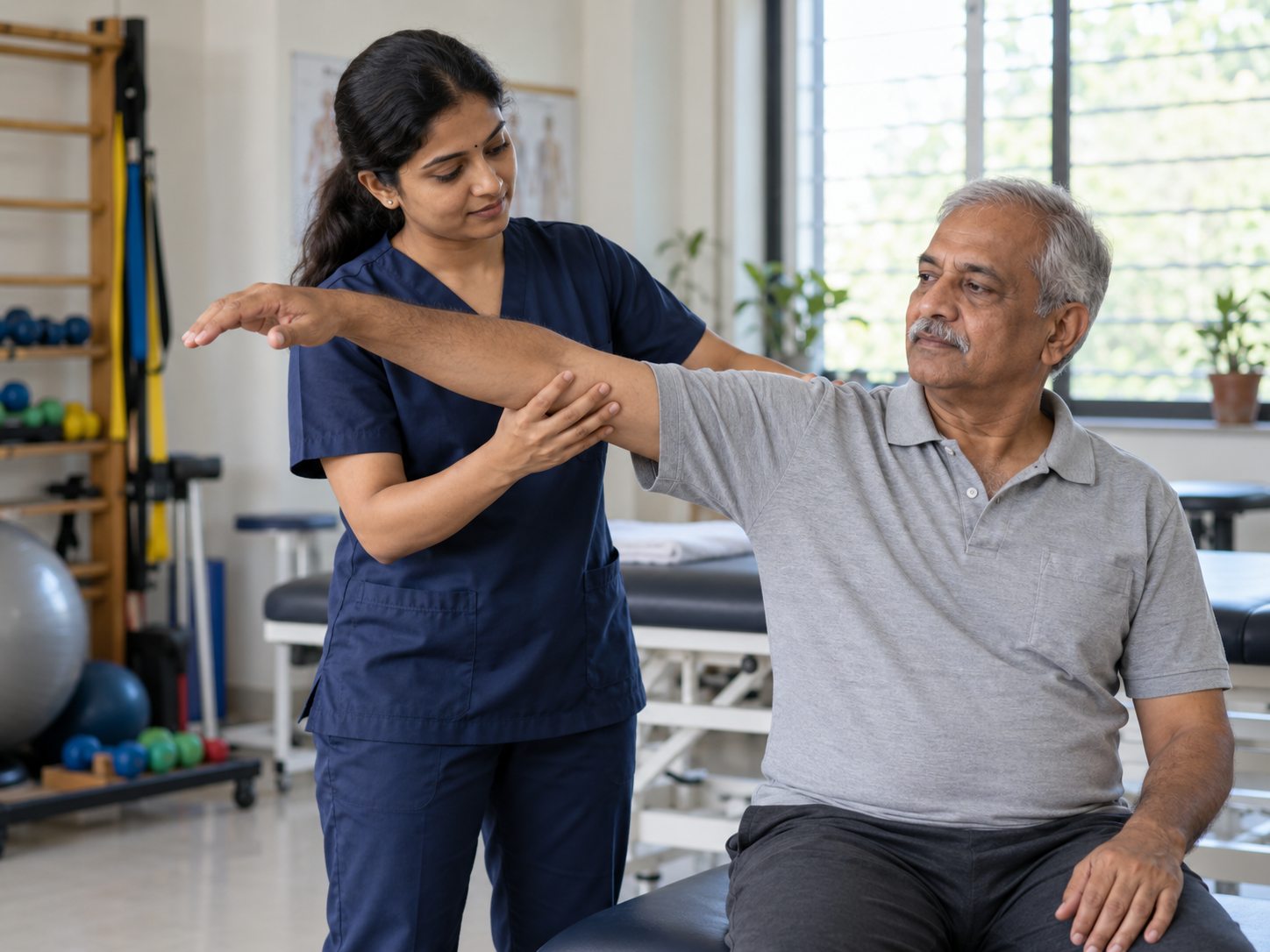
Knee pain is one of the most common complaints among older adults in Kerala — making it harder to climb stairs, walk to the temple, mosque or church, sit on the floor or play with grandchildren. In most cases, the cause is knee osteoarthritis. The encouraging news is that the right exercises, guided by a physiotherapist, can reduce pain and keep you active for years. Here are eight safe, effective exercises and practical tips from our geriatric physiotherapy team in Kannur.
What Is Knee Osteoarthritis?
Osteoarthritis (OA) is a condition in which the smooth cartilage covering the ends of the bones gradually thins, and the whole joint — bone, ligaments, lining and muscles — changes over time. It is more common with age, after past knee injuries, with higher body weight and in people whose work or lifestyle involves heavy kneeling or squatting.
Common signs of knee osteoarthritis include:
- Pain when walking, climbing stairs or getting up from a chair
- Stiffness in the morning or after sitting, usually lasting less than 30 minutes
- A grinding or crackling feeling (crepitus) when bending the knee
- Mild swelling, especially after activity
- Difficulty squatting or sitting cross-legged
- Weak or "giving way" feeling in the knee
Why Exercise Is the Best Medicine for Knee OA
It may sound surprising, but international guidelines for knee osteoarthritis recommend exercise and education as the first-line treatment for almost everyone — together with weight management where needed. Here is why:
- Stronger thigh muscles absorb shock and take load off the joint.
- Movement nourishes cartilage, which relies on joint motion for its nutrition.
- Exercise reduces pain sensitivity and improves mood and sleep.
- Better balance lowers the risk of falls — a major concern for seniors.
Even people with "bone-on-bone" X-ray findings often see meaningful improvement in pain and function with a consistent exercise programme.
8 Physiotherapy Exercises for Knee Pain and Osteoarthritis
Do these exercises on most days of the week. Start with fewer repetitions and build up gradually. Hold onto a sturdy chair or table for balance where needed.
1. Static Quadriceps (Quad Sets)
Sit or lie with your leg straight. Place a small rolled towel under your knee. Tighten the muscle on the front of your thigh, pressing the back of your knee into the towel. Hold for 5–10 seconds. Repeat 10 times, 2–3 sets.
2. Straight Leg Raise
Lie on your back with one knee bent and the other leg straight. Tighten the thigh of the straight leg and lift it to the height of the bent knee. Hold for 3 seconds, then lower slowly. Repeat 10 times each leg.
3. Heel Slides
Lying on your back, slowly slide your heel towards your buttock, bending the knee as far as comfortable, then slide it back. This maintains knee flexibility. Repeat 10–15 times each leg.
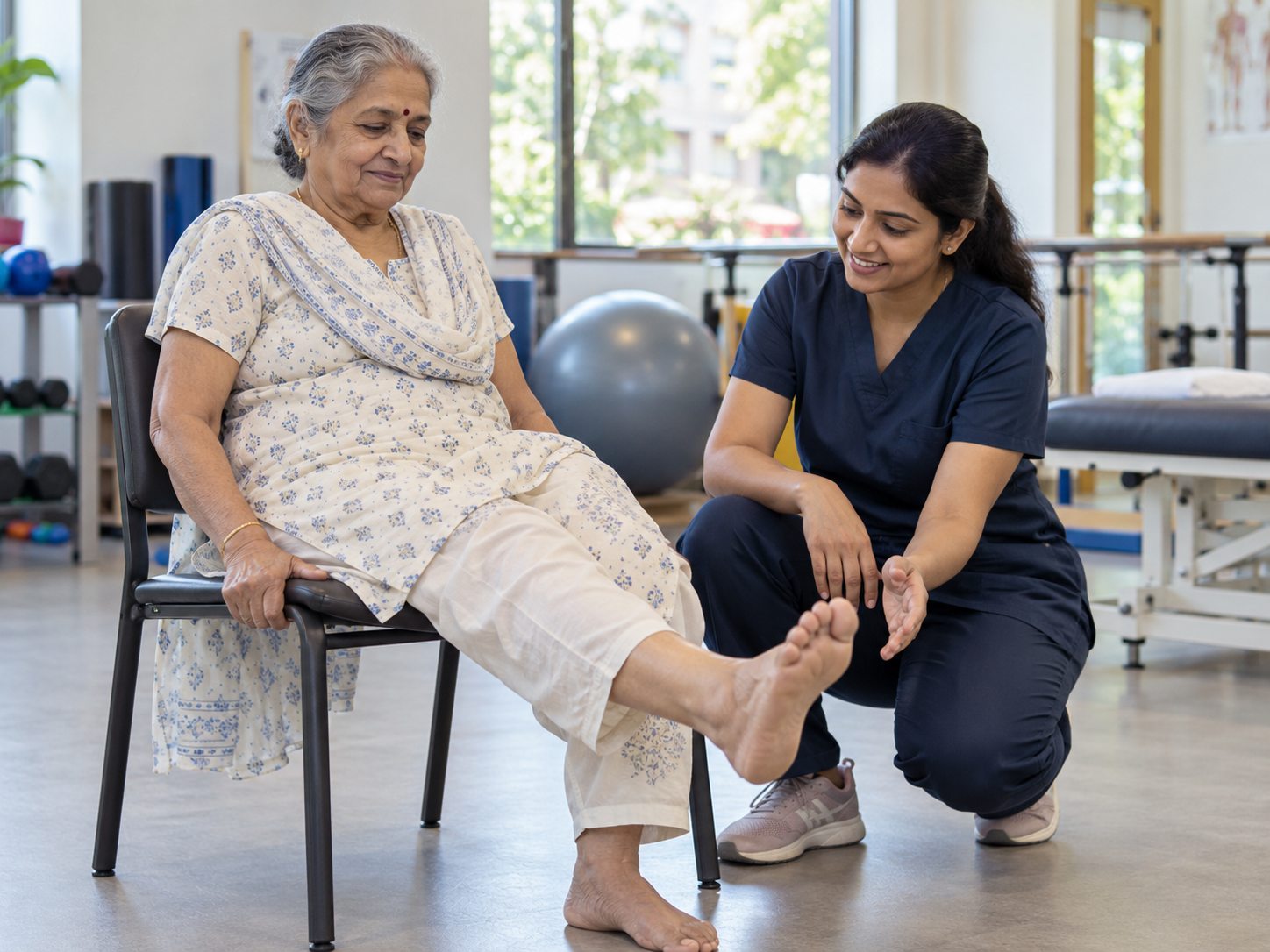
4. Seated Knee Extension
Sit tall on a chair. Slowly straighten one knee until the leg is level, hold for 3–5 seconds, then lower. Add a light ankle weight later as you get stronger. Repeat 10–12 times each leg.
5. Sit-to-Stand
Sit near the front of a sturdy chair with feet hip-width apart. Lean slightly forward and stand up, using your hands on the armrests if needed, then sit down slowly with control. This is one of the most functional exercises for daily life. Repeat 8–10 times.
6. Standing Hamstring Curl
Hold the back of a chair. Bend one knee, bringing your heel towards your buttock, then lower slowly. Keep your thighs in line. Repeat 10 times each leg.
7. Heel Raises
Stand holding a chair. Rise up onto your toes, hold for 2 seconds, then lower slowly. Strengthens the calves and improves balance. Repeat 10–15 times.
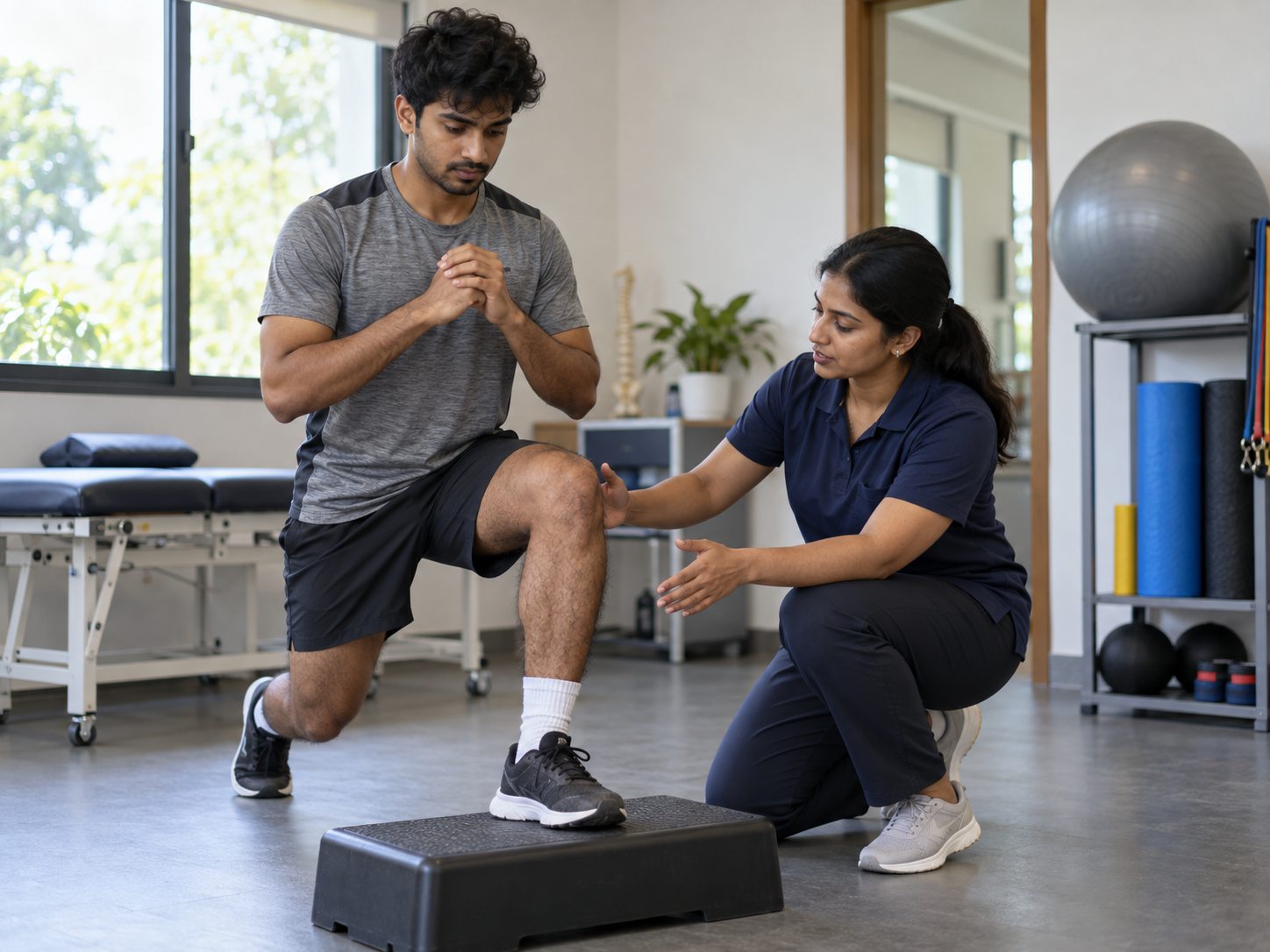
8. Step-Ups
Using a low, stable step (or the bottom stair) and holding the rail, step up with your stronger leg first, then bring the other leg up. Step down with the weaker leg first. Progress to leading with the weaker leg. Repeat 8–10 times each leg.
Mild discomfort — up to about 3 out of 10 — during exercise is generally acceptable, as long as it settles within 24 hours and does not get worse day by day. If pain is sharp, the knee becomes more swollen, or pain lasts into the next day, reduce the repetitions and speak to your physiotherapist.
Lifestyle Tips to Protect Your Knees
- Manage your weight: research shows each kilogram of weight lost reduces the load on the knee by several kilograms with every step.
- Stay active daily: short, regular walks on flat ground, cycling and water exercise are knee-friendly.
- Limit deep squatting and cross-legged floor sitting during painful phases; use a chair and a western-style toilet if possible.
- Use a walking stick correctly: hold it in the hand opposite the painful knee.
- Choose supportive footwear with cushioned soles.
- Use heat for stiffness and a cold pack wrapped in a cloth for swelling after activity (15 minutes).
- Pace yourself: spread heavier tasks across the day rather than doing everything at once.
Knee pain slowing you down?
Our geriatric and orthopaedic physiotherapists in Kannur create safe, personalised programmes to reduce pain and keep seniors independent.
How a Physiotherapist Helps With Knee Osteoarthritis
Home exercises are powerful, but a supervised programme often delivers faster and safer results. At Pranah, knee OA treatment may include:
- A detailed assessment of strength, alignment, walking pattern and balance
- Manual therapy and joint mobilisation to ease stiffness
- Electrotherapy such as TENS, IFT or ultrasound for pain relief
- Progressive strengthening and balance training tailored to your level
- Taping, bracing and walking-aid advice where useful
- Pre-operative and post-operative knee replacement rehabilitation
Explore our geriatric physiotherapy and orthopaedic care services. Active seniors may also enjoy our guide to sports injury prevention.
- A hot, red, very swollen knee, especially with fever
- Sudden, severe pain or inability to put weight on the leg
- The knee locking or repeatedly giving way
- Calf pain and swelling, particularly after surgery or long travel
Knee Osteoarthritis: FAQs
Can physiotherapy reverse knee osteoarthritis?
Physiotherapy cannot regrow lost cartilage, but it can significantly reduce pain, improve strength and mobility, and slow functional decline. Many people with knee osteoarthritis return to walking and daily activities comfortably with a consistent exercise programme.
Is walking good for knee osteoarthritis?
Yes. Regular walking on flat surfaces is one of the best activities for knee OA. Start with short, comfortable distances and gradually increase. Supportive footwear and a walking stick on the opposite side can help during flare-ups.
Can exercise help me avoid knee replacement surgery?
For many people, a structured exercise and weight management programme reduces pain enough to delay or avoid surgery. If surgery is eventually needed, being stronger beforehand leads to a faster recovery afterwards.
How long before knee exercises start to help?
Many people notice less pain and easier movement within 4–6 weeks of regular exercise, with continued improvement over 8–12 weeks. Consistency is the key.
Where can seniors get knee pain treatment in Kannur?
Pranah Advanced Physiotherapy Centre in Moonnuperiya, Kannur offers knee pain assessment, osteoarthritis management and knee replacement rehabilitation for seniors. Call or WhatsApp 95671 42288 to book.
Medical disclaimer: This article is for general education only and is not a substitute for a personal assessment. Please consult a qualified physiotherapist or doctor before starting any new exercise or treatment, especially if you have a medical condition.