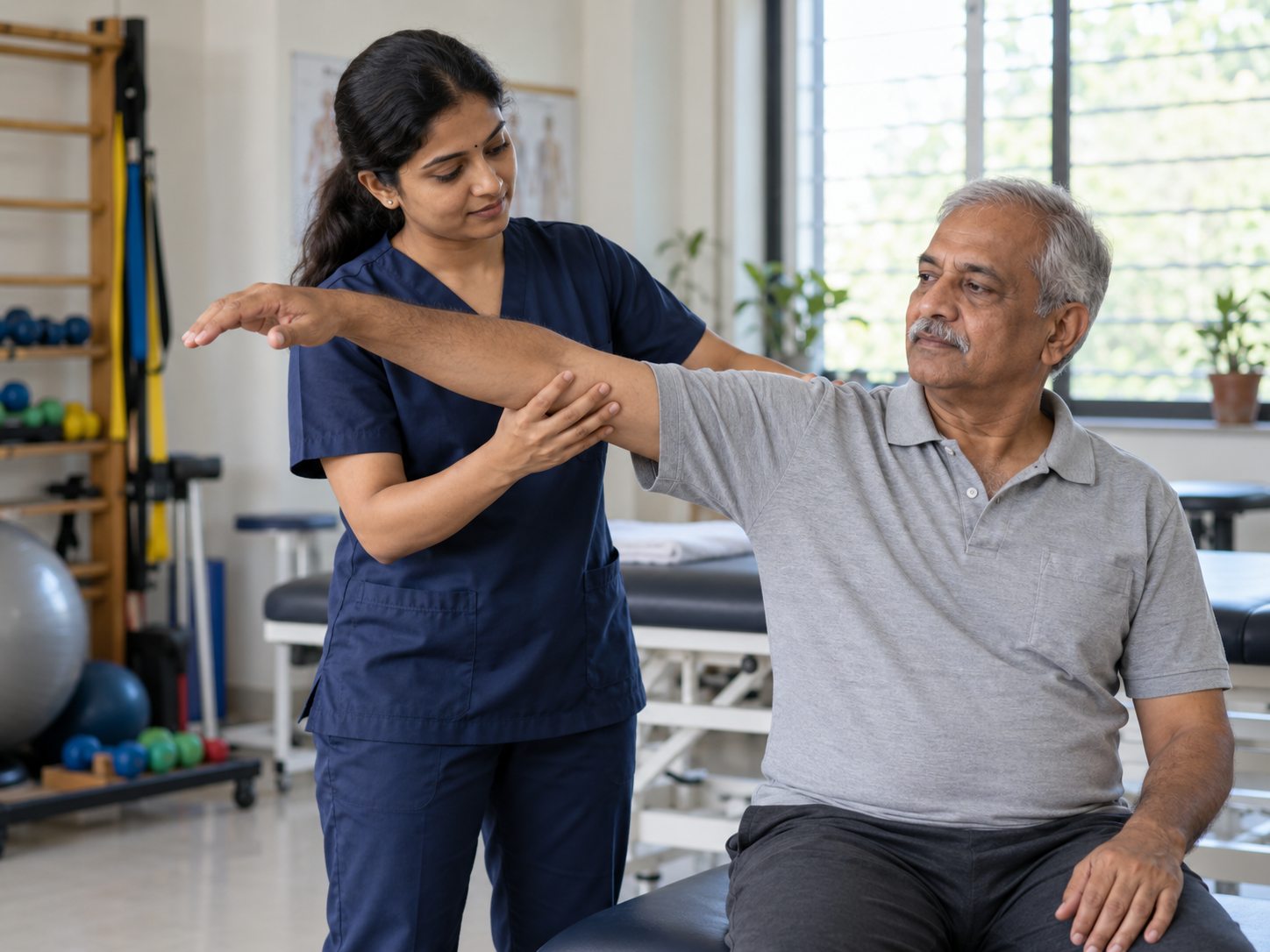
A stroke can change life in a moment — affecting movement, balance, speech and independence. But the brain has a remarkable ability to rewire itself, and structured neuro physiotherapy is one of the most powerful tools for unlocking that recovery. This guide explains how stroke rehabilitation works, what to expect at each stage, and how families in Kannur can support their loved ones at home.
Balance loss · Eyes (sudden vision loss) · Face drooping · Arm or leg weakness · Speech difficulty · Time to call an ambulance (dial 108). Every minute counts — emergency treatment in the first few hours can save brain tissue.
What Is Neuro Physiotherapy?
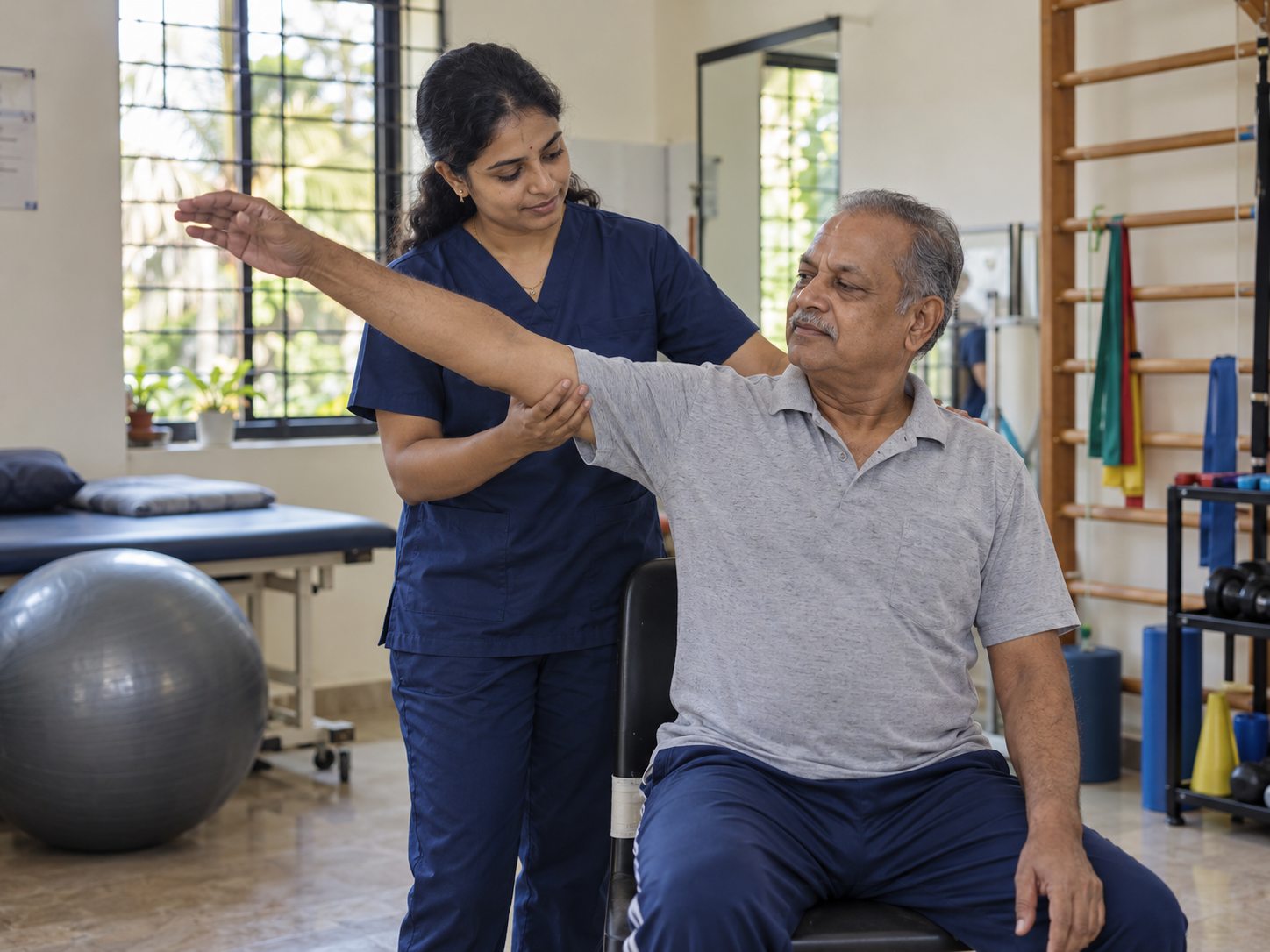
Neuro physiotherapy is a specialised branch of physiotherapy for people whose movement is affected by conditions of the brain, spinal cord or nerves. After a stroke, it focuses on helping the brain build new pathways — a process called neuroplasticity — through repeated, meaningful practice of movement.
A neuro physiotherapist works on:
- Regaining movement and strength in the weak arm and leg
- Sitting and standing balance
- Walking, with or without an aid
- Managing muscle stiffness (spasticity)
- Daily tasks such as getting out of bed, dressing and using the bathroom
- Preventing complications like shoulder pain, joint stiffness and falls
When Should Stroke Rehabilitation Start?
Rehabilitation should begin as soon as the person is medically stable — often while they are still in hospital. Gentle positioning, breathing exercises and early sitting help prevent complications. The fastest recovery usually happens in the first three to six months, when the brain is most adaptable, so consistent therapy in this window is especially valuable.
That said, recovery does not stop at six months. Many people continue to gain strength, balance and function for years with the right practice. It is never "too late" to benefit from physiotherapy.
The Stages of Stroke Recovery
| Stage | Typical Timeframe | Physiotherapy Focus |
|---|---|---|
| Acute | First days to weeks (usually in hospital) | Safe positioning, chest care, early sitting, preventing pressure sores and joint stiffness |
| Early sub-acute | Weeks to 3 months | Intensive task practice, sitting and standing balance, transfers, early walking |
| Late sub-acute | 3 to 6 months | Walking quality, arm and hand function, endurance, independence at home |
| Chronic | 6 months onwards | Continued strengthening, community walking, fitness, preventing deconditioning |
Every stroke is different. The size and location of the stroke, overall health, age and motivation all influence the speed and extent of recovery.
Neuro Physiotherapy Techniques Used in Stroke Rehab
Task-Specific Training
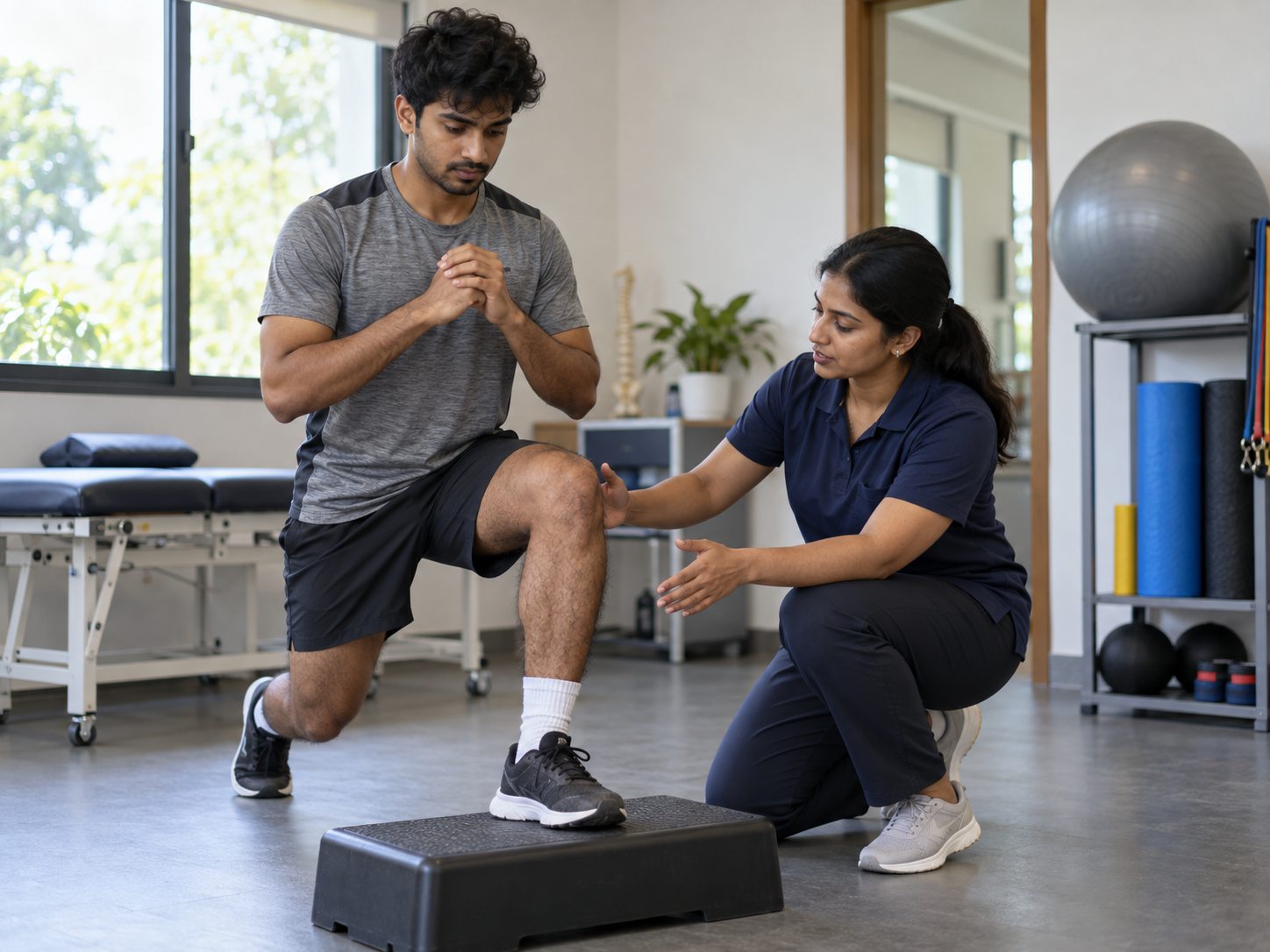
The brain learns what it practises. Rather than isolated exercises alone, therapy focuses on real tasks — reaching for a cup, standing up from a chair, climbing a step — repeated many times with gradual progression.
Neuro-Developmental Techniques
Approaches such as the Bobath concept use hands-on facilitation to guide normal movement patterns, improve postural control and reduce compensations from the stronger side.
Constraint-Induced Movement Therapy (CIMT)
For suitable patients with some movement in the affected hand, the stronger arm is gently restricted for part of the day so the weaker arm is forced to work. This "use it or lose it" approach can significantly improve arm function.
Mirror Therapy
Watching the reflection of the unaffected limb moving in a mirror creates the illusion that the affected limb is moving, which can stimulate brain areas involved in movement.
Balance and Gait Training
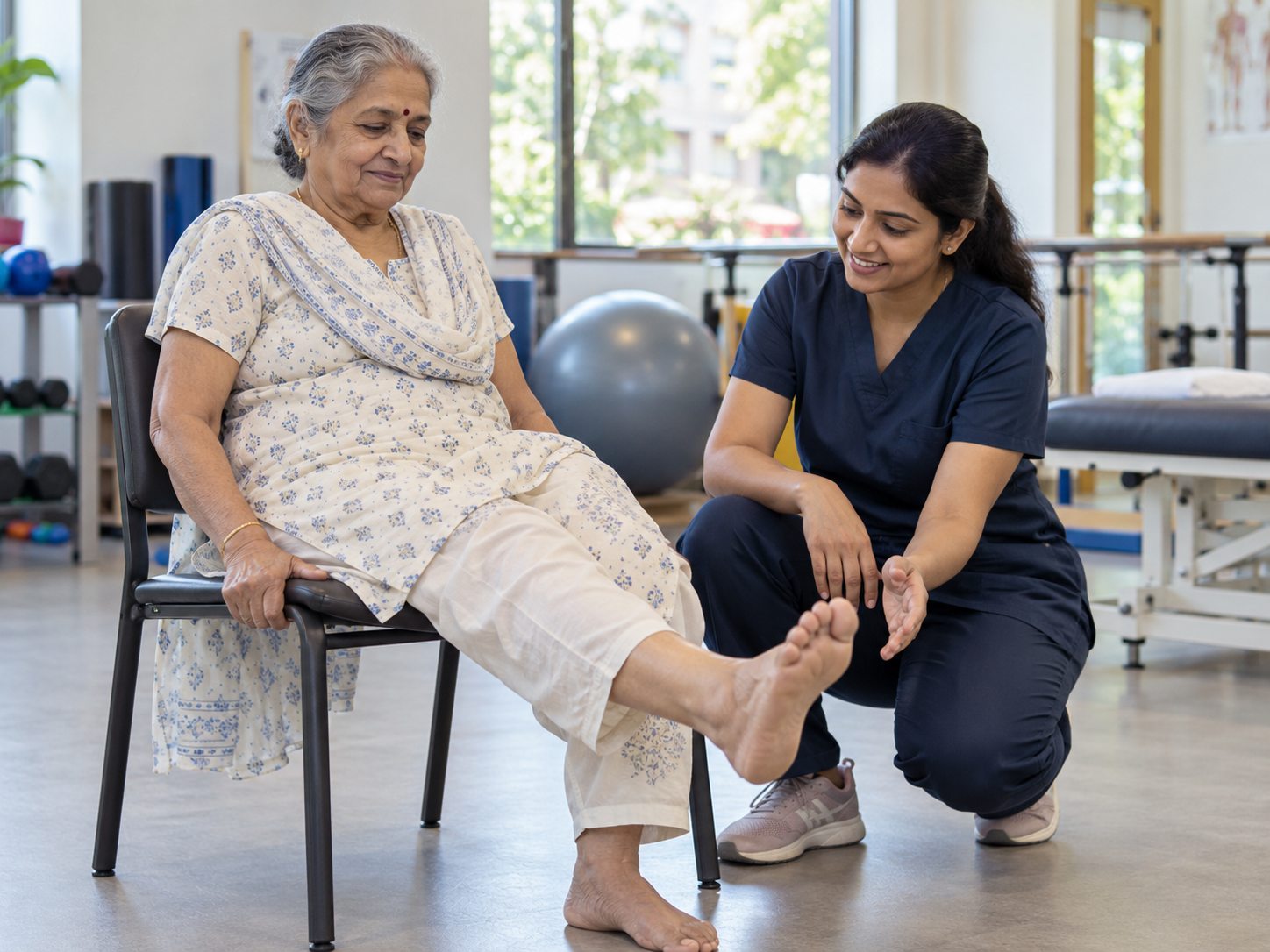
Weight shifting, standing balance, step training and walking practice — progressing from parallel bars to walking aids and independent walking — are central to getting back on your feet safely.
Electrical Stimulation
Neuromuscular or functional electrical stimulation can help activate weak muscles, for example the muscles that lift the foot or open the hand, and support re-learning of movement.
Spasticity and Shoulder Management
Stretching, positioning and regular movement help manage muscle stiffness. Careful support of the weak arm helps prevent painful shoulder subluxation, a common complication after stroke.
Neuro rehabilitation in Kannur
Pranah offers structured neuro physiotherapy for stroke, paralysis, Parkinson's disease and other neurological conditions. Talk to our team about a personalised rehab plan.
How Families Can Help at Home
Family members and caregivers play a huge role in stroke recovery. Practice between sessions multiplies the benefits of therapy. Here are some practical tips:
- Encourage use of the affected side — place objects, food and the TV on the weaker side so the person turns towards it.
- Support the weak arm on a pillow or table when sitting; never pull on the weak arm to help them move.
- Let them do as much as safely possible — doing everything for them can slow recovery.
- Make the home safer: remove loose mats, add grab bars in the bathroom, improve lighting and keep walkways clear.
- Follow the home exercise programme from the physiotherapist every day — short, frequent sessions work best.
- Watch mood and fatigue — depression and tiredness are common after stroke and should be discussed with the doctor.
- Celebrate small wins — progress is often gradual, and motivation matters.
Other Neurological Conditions We Treat
The same principles of neuro rehabilitation help people living with many other conditions, including:
- Parkinson's disease — big-amplitude movement training, balance and walking strategies
- Bell's palsy — facial exercises and muscle re-education
- Spinal cord injury — strengthening, transfers and wheelchair skills
- Guillain-Barré syndrome and peripheral neuropathy — progressive strengthening and balance
- Head injury — balance, coordination and functional retraining
See all our neuro rehabilitation services, or read how we approach mobility and strength in older adults.
Stroke Rehabilitation: FAQs
How long does stroke recovery take with physiotherapy?
The most rapid improvement usually happens in the first three to six months after a stroke, but many people keep improving for a year or more. The timeline depends on the severity of the stroke, general health and how consistently therapy and home exercises are done.
Can a paralysed arm or leg recover after a stroke?
Many people regain significant movement in a weak or paralysed limb through neuroplasticity and intensive, task-specific physiotherapy. The amount of recovery varies, but early and consistent rehabilitation gives the best chance of improvement.
How many times a week should stroke physiotherapy be done?
In the early months, more practice generally leads to better outcomes. Many patients benefit from therapy sessions several times a week combined with daily home exercises. Your neuro physiotherapist will recommend a frequency based on your condition and goals.
Is it too late to start physiotherapy a year after a stroke?
No. Even in the chronic stage, physiotherapy can improve walking, balance, strength, fitness and independence. Progress may be slower, but meaningful gains are still very possible.
Do you offer neuro rehabilitation in Kannur?
Yes. Pranah Advanced Physiotherapy Centre in Moonnuperiya, Kannur provides neuro rehabilitation for stroke, Parkinson's disease, Bell's palsy, spinal cord injury and other neurological conditions. Call 95671 42288 to book.
Medical disclaimer: This article is for general education only and is not a substitute for a personal assessment. Please consult a qualified physiotherapist or doctor before starting any new exercise or treatment, especially if you have a medical condition.